This is a post about all you need to know about what to do in Liechtenstein.
Ever found yourself standing in a country you can drive through in about 45 minutes, sipping wine grown by an actual prince? That’s Liechtenstein for you.
My partner and I love visiting small countries! We actually just got back to Andorra which was interesting…I’ll write a post about it at some point soon but, in the meantime, you can also read my post on the best places to visit in Luxembourg when you’re done here. But back to Liechtenstein, which might be our favourite so far. It’s sandwiched between Switzerland and Austria, has a population of just over 40,000 and manages to pack in alpine villages, medieval castles, royal vineyards and some seriously good cheese dumplings into a space roughly the size of a large park.
If you’re wondering whether Liechtenstein is worth visiting: yes, it absolutely is. It’s not a party destination and it’s not cheap, but…you know when you think about Europe being like a fairy-tale setting? Liechtenstein is a lot like that! (so is Luxembourg btw, speaking of small countries…).
In this guide I’ll walk you through all the best things to do in Liechtenstein, how to get there, where to stay, what to eat and all the practical info you need including what a bunch of you have been searching on Google: no, you don’t need to speak German to visit (more on that below).
I visited in October with my partner. We stayed overnight in the mountain village of Triesenberg and had one of the best hotel views of my life. We had a car (driving from London through 8 countries!), which helped, but Liechtenstein is fine to navigate without one too.

Quick Guide: Visiting Liechtenstein
| Location | Landlocked between Switzerland and Austria |
| Capital | Vaduz |
| Currency | Swiss franc (CHF) |
| Language | German (but English is widely spoken in tourist areas) |
| Getting there | Train to Sargans or Buchs (Switzerland), then local bus to Vaduz |
| Nearest airport | Zurich (approx. 1.5 hrs) or Innsbruck (approx. 1.5 hrs) |
| Best time to visit | May – October for hiking; December – March for skiing in Malbun |
| How long do you need | 1 day as a day trip is fine; 2 days to explore properly |
| Don’t miss | Vaduz Castle hike, the Prince’s winery, Triesenberg village, Käsknöpfle |
Best Things To Do in Liechtenstein
Start in Vaduz, the Capital
Vaduz might be one of the quietest capitals in Europe, but it’s the perfect place to start. The main street, Städtle, is lined with cafés, museums, art galleries and shops selling stamps and coins, two of Liechtenstein’s most famous exports. Yes, stamps. The philately game is strong there.
Stop by the Liechtenstein National Museum to get a feel for the country’s history, then head to the Kunstmuseum Liechtenstein for contemporary art. If you’re into quirky niche museums, the Postal Museum is worth a visit. Vaduz Cathedral, also known as St Florin’s Cathedral, is a peaceful spot with beautiful architecture and worth a quick look.
While you’re in Vaduz, don’t forget to get your passport stamped at the Tourist Information Office. Since Liechtenstein has no airport and no border controls, this is how you get an official stamp for 3€. Given that Liechtenstein is one of the wealthiest countries in the world per capita, I have a feeling this is not unrelated. 😂
If you’d rather explore Vaduz with a local, there are some excellent walking tours available through GetYourGuide. These are great for first-timers who want the history and the hidden details without having to dig for them. If you’re a regular reader you’ll know I LOVE recommending the free walking tours but, sadly, Vaduz doesn’t have one. You can find paid ones though like this Vaduz on Foot.
Hike Up to Vaduz Castle
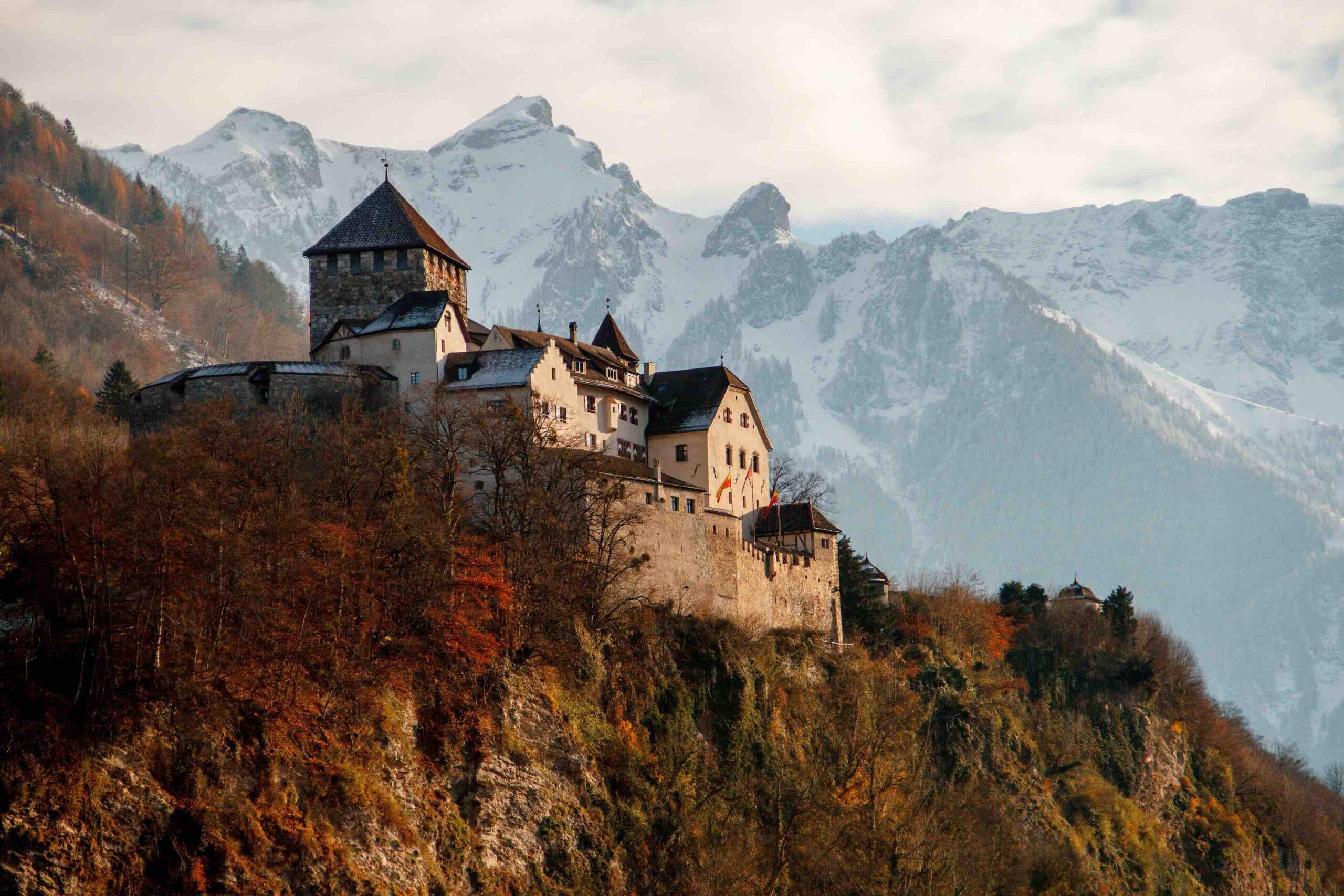
One of the best things to do in Liechtenstein and it’s free. Vaduz Castle is the official residence of the royal family and, while you can’t go inside, the short hike up offers stunning views over the Rhine Valley and the Alps. It’s especially beautiful at sunset and genuinely one of the most photogenic spots in the country.
Fun fact: there is one day a year when the prince opens the castle to everyone for a party. On 15 August, Liechtenstein National Day, the public can attend a reception on the castle lawn and visit the rose garden. The prince invites the entire country. The entire country is around 40,000 people. How fun would that be to attend?! (This is making me want to rewatch The Prince & Me… be still, my millennial heart ruled by Julie Stiles movies)
Visit the Prince’s Vineyard (and Actually Taste the Wine)
I’m going to be honest with you: I didn’t do this when I visited and I am still annoyed about it. The Hofkellerei, the Court Winery of the Prince of Liechtenstein, is right there in Vaduz, tucked into the Herawingert vineyard with the castle visible in the background as you sip. It’s one of the best vineyards in the Rhine Valley, growing Pinot Noir and Chardonnay in a south-facing microclimate warmed by the Föhn wind.
Tastings run Monday to Saturday and include a champagne reception, a guided tour of the vineyard and cellars, and six wines. The whole thing lasts around 60 to 90 minutes. No booking needed for groups of up to five people and it’s only CHF19 (about £17). There are also shorter public tastings with a guided tour at 10:30 and 14:30 daily if you’re short on time.
You can book a dedicated Cheese, Royal Winery and Läderach tour through GetYourGuide too, which combines the wine tasting with a Swiss chocolate experience. Honestly one of the more inspired itineraries I’ve come across. I might have to arrange another trip to that area…but it might have to be sponsored because what to do you mean it’s £600 for this tour??!!
Cross the Old Wooden Bridge into Switzerland
Just a short walk from central Vaduz is the Alte Rheinbrücke, a historic covered wooden pedestrian bridge that crosses the Rhine into Switzerland. It dates back to the early 1900s and is one of the last of its kind still in use. It’s free, it’s photogenic and you can stand with one foot in Liechtenstein and the other in Switzerland which is kind of a fun thing to do. We did that on the bridge and in the river under it as it was very shallow.
On the Swiss side there’s a lovely walking and cycling path along the river if you want to stretch your legs a bit further. On the Vaduz side there’s a bit of a walking path for a little bit.
Explore the Mountains in Malbun
If you want to get beyond the capital, head to Malbun, a small mountain village that’s Liechtenstein’s answer to a ski resort in winter and a hiking base in summer. The trails here wind through alpine meadows with wildlife and fresh air for some wholesome outdoor time.
In winter, the Malbun ski area is particularly good for beginners and families. It’s not huge, but the setting is beautiful and the crowds are nothing compared to the Swiss resorts nearby. In summer, the chairlifts still run so you can reach the higher viewpoints without committing to a full hike.
If you’re into hiking in Liechtenstein more broadly, the trails here are genuinely excellent and very underrated.
Visit the Traditional Village of Triesenberg
Triesenberg sits on a mountain terrace above Vaduz with sweeping views over the Rhine Valley and it’s where I’d recommend staying if you’re spending a night. The village is known for its unique Walser dialect and heritage, the houses are built in traditional Walser style and the whole place feels like stepping back in time.
Visit the small but interesting Walser Museum, stop for a meal at one of the rustic restaurants serving regional food and just take a walk around. In autumn especially, when the hills go golden and the air gets crisp, it’s stunning.
We stayed at Hotel Oberland and could not believe our luck. Look, we really winged this trip. We were literally figuring out where we wanted to go while driving…as I searched for a place to stay in Liechtenstein literally as we drove through Switzerland, I found Hotel Oberland to be the most affordable (have I mentioned Liechtenstein is seriously expensive?!).
We got to our room, opened the curtains to the balcony and found ourselves staring directly at the Swiss mountains. The room was spotless, the self check-in was seamless and breakfast the next morning was easy and excellent. I’d go back in a heartbeat.
Check out this view on my Insta! Along with some other bits of Triesenberg and Vaduz.
Walk the Liechtenstein Trail
The Liechtenstein Trail is a 75-kilometre hiking route that runs the entire length of the country, connecting all 11 municipalities. You can walk it in sections or, if you’re feeling ambitious, complete the whole thing in three to five days. It passes through mountain paths, forest walks and village streets, all clearly marked with information points about local history along the way. There’s also an official app with maps and commentary.
I didn’t have time for it on my visit but now that I’m writing this I desperately want to go back and do it. Walking across an entire country?! Sign me up!
Visit Gutenberg Castle in Balzers
While Vaduz Castle is off-limits to visitors, Gutenberg Castle in the town of Balzers is open to explore. It dates back to the Middle Ages, sits on a hilltop with beautiful views and has a lovely set of grounds and gardens. In summer, there are sometimes concerts and open-air events held here. Worth checking if you’re visiting between June and August!
It’s less famous than Vaduz Castle but just as scenic and far less crowded.
Discover the Food in Liechtenstein
One of the genuine highlights of visiting Liechtenstein is the food. It sits at the crossroads of Swiss, Austrian and German culinary traditions with its own local twist and it’s very good.
The national dish is Käsknöpfle: small egg dumplings covered in melted cheese and crispy onions. It’s a lot like the delicious and comforting German spätzle. Other things to look for include Ribel (a cornmeal dish often served at breakfast), Liechtenstein-style schnitzel and excellent alpine cheeses. For dessert, fruit tarts made with local plums or hazelnuts are worth seeking out. In autumn many restaurants also offer wild game and mushroom dishes.
Most restaurants here are family-run with cosy, unfussy atmospheres, exactly what you want after a day of hiking or castle-visiting.
Stop in the Smaller Villages
Beyond Vaduz and Malbun, a few other villages are worth a stop if you have the time. Schaan is good for shopping and coffee, Ruggell has nature reserves and wetlands that birdwatchers will love and Balzers is worth it for the castle and river views. Each one has its own character and gives you a more local feel than staying in the capital.
Visit the Border Tripoint
For something a bit quirky: near the village of Bangs is the tripoint where Liechtenstein, Switzerland and Austria all meet. It’s more symbolic than dramatic. To be honest, most European tripoints are, in my experience! But standing in three countries at once is a very specific kind of travel tick and I’m here for it. Coming from Brazil, where crossing a state border takes longer than driving through all of Liechtenstein, I will never stop finding this amusing.

Getting to Liechtenstein
Liechtenstein has no airport, but it’s easy to reach by train or car from Switzerland or Austria. The nearest major airports are Zurich (around 1.5 hours) and Innsbruck (around 1.5 hours).
By train: Take a train to Sargans or Buchs in Switzerland, then a local bus to Vaduz. If you’re using a Swiss Travel Pass, the buses into Liechtenstein are included.
From Zurich: This is the most popular route and it’s very straightforward. You can actually book a guided day trip from Zurich if you’d prefer to just sit back and relax. There are several great options on GetYourGuide like this small group tour that combine Liechtenstein with the Heidiland region.
From Munich: Munich to Liechtenstein is roughly two hours by car, making it a very doable day trip if you’re based there.
By car: Having a car gives you a lot more flexibility, especially for reaching Malbun, Triesenberg and the smaller villages. Roads are excellent and the country is compact enough that you can cover a huge amount in one day.
If you’re planning a wider regional trip, my Munich travel guide has everything you need for the German side of things, and if you’re touring small countries in the region, don’t miss my guide to Luxembourg.
Where to Stay in Liechtenstein
Most people visit Liechtenstein as a day trip, but staying overnight is worth it if you ask me. In fact,I’d recommend staying longer for the hikes.
Vaduz is the obvious base if you want to be central. There are a handful of hotels ranging from business-style to boutique.
Triesenberg is where I’d go back to. It’s quieter, the views are extraordinary and it’s only a short drive or bus ride from Vaduz. Hotel Oberland is excellent! Comfortable rooms, great breakfast and that view. I booked it last minute as the cheapest available option and we couldn’t believe what we got. Self check-in, chalet vibes and a boot room for ski season. If you’re carless there’s a bus stop right outside! (and it takes you to Malbun too!).
Malbun is worth considering if you’re visiting for skiing or hiking.
For more options, search hotels in Liechtenstein on Booking.com. The country is small enough that anywhere you stay will be convenient.
Practical Tips for Visiting Liechtenstein
Currency: Swiss franc (CHF). Cards are widely accepted but it’s worth having some cash for smaller purchases and the passport stamp (I honestly can’t remember if we paid by card or cash…).
Language: The official language is German and the local spoken dialect is Alemannic German which is different enough from standard German that even fluent German speakers sometimes struggle with it. The good news is, you absolutely do not need to speak German to visit Liechtenstein. English is widely understood, especially in Vaduz, at tourist attractions, in hotels and in restaurants. Most staff at popular sites speak it well. A polite “Guten Tag” to start a conversation goes down well, but you won’t be stuck without German.
We actually saw a motorbike accident right in front of our hotel and my partner ran to help. He then had to give a statement to the police about what he saw and that was all in English…
Getting around: Buses are reliable and often timed well with walking routes. Having a car is helpful for reaching the more remote spots but not essential.
Cost: Liechtenstein is definitely not cheap. It runs on Swiss prices, which means accommodation and eating out will set you back more than most European destinations. That said, many of the best things to do are free (the castle hike, the wooden bridge, the villages) and the food is hearty enough that you don’t need to eat extravagantly.
Safety: One of the safest countries in the world. Public transport is punctual, people are friendly if reserved and the whole place has a very calm, organised feel. Also…everybody is rich. At least that’s what we were told by the sports shop attendant! We stopped in Germany during this road trip to visit my host family who I lived with during my au pair year. One of their kids was going to uni in Munich and he said many Liechtensteiners went to uni there. Apparently they were all given a million Euro 🥹
Best time to visit: May to October for hiking and general sightseeing, with the best conditions in July and August. December to March for skiing in Malbun. Autumn is beautiful, with golden hills and fewer visitors.
Plug sockets: Type C and Type J (Swiss standard). A standard European two-pin plug will fit, but if your adapter is bulky it may not seat properly in the recessed Swiss socket.
Is Liechtenstein Worth Visiting?
Yes! With the right expectations. It’s not a place for nightlife, big museums or urban energy. It’s a place for alpine scenery, comfort food, unusual history (a royal winery! A castle party once a year! Stamps as an export!) and the very specific satisfaction of standing in a country you can walk across in a day. The landscape is very stunning but you can get similar in Switzerland if you don’t want to bother with Liechtenstein.
If you’re already in Switzerland or southern Germany, adding Liechtenstein to your itinerary is easy though. If you’re making a dedicated trip, pair it with Zurich or Munich.
FAQ: Visiting Liechtenstein
No. English is widely spoken. The official language is German (specifically an Alemannic dialect), but you won’t have communication difficulties as an English-speaking visitor. Knowing a few basic German phrases like “Guten Tag” (hello) and “Danke” (thank you) is always appreciated, but not necessary.
Yes, especially if you’re already in the region. It’s one of Europe’s smallest and least-visited countries, which means it feels very off the beaten path. The scenery is beautiful, the food is good and the quirky royal touches (the castle, the winery, the national day party) make it memorable.
One day is enough for a solid day trip covering Vaduz, the castle hike and the wooden bridge. Two days lets you add Malbun, Triesenberg, the winery tasting and a few of the smaller villages without rushing.
It runs on Swiss prices and people can afford it, so yes, it’s one of the pricier small countries in Europe. Accommodation and restaurants are the main costs. The good news is that many of the best experiences are free and you can keep food costs down by eating at local family-run restaurants rather than tourist spots in central Vaduz.
The Swiss franc (CHF). Cards are widely accepted but it’s worth having some cash.
Liechtenstein has no airport of its own. The nearest international airports are Zurich (around 1.5 hours) and Innsbruck (around 1.5 hours). Most visitors arrive by train via Sargans or Buchs in Switzerland.
The official language is German. The everyday spoken language is an Alemannic dialect (similar to Swiss German), which differs significantly from standard High German. English is widely spoken, particularly in tourist areas.
Low taxes, high wealth, stamps and coins as exports, the royal Princely family, Vaduz Castle, alpine scenery and, once you’ve been, excellent cheese dumplings.
Absolutely. The journey from Zurich takes around 1.5 hours by train (to Sargans or Buchs, then bus) and it’s one of the most popular day trips in the region. You can also book a guided day trip if you’d prefer.
More Posts You’ll Like
- Munich Travel Guide, a great base for a Liechtenstein day trip
- Best Places to Visit in Luxembourg, fellow small country, equally underrated
- Best Cities in Germany for planning the wider regional trip

This post was about all you need to know to visit Liechtenstein.