This post contains affiliate links. If you book through them, I may earn a small commission at no extra cost to you it helps keep ESLA running. You can read ESLA’s privacy policy here. Thank you!
Winter in London means dark afternoons, damp pavements and A LOT OF LIGHTS. It is a brilliant time to visit if you pack properly and plan your days around the early sunsets. This guide covers what the weather is like from December to February, what to wear so you are not freezing out on the windy streets and the best things to do in London in winter, from Christmas lights and ice skating to cosy pubs and walks along the Thames.
It is written for first-timers planning a winter trip and for anyone who already lives here and needs ideas to get out of the flat between November and March. I know it can be tough, especially after the holiday magic‘s gone, but the winter blues are real so it’s important to keep doing fun things!
You will find a month-by-month weather breakdown*, a packing list, where to stay and how to fit it all into roughly eight hours of daylight.
*As we all know (though not everyone understands), climate crisis is a thing so the weather prediction is based on what usually happens. It can change, of course! Last Christmas in London, even in the North of England, was way warmer than usual!

Quick Guide: Winter in London
| Location | London, England |
| Getting there | Heathrow, Gatwick, Stansted, Luton or London City by air, or Eurostar into St Pancras. See my guide to the London airports here |
| Getting around | Tube, Elizabeth line, buses and walking. Tap in and out with a contactless card or phone. Here’s my guide to London’s public transport |
| Currency | British pound (£) |
| Best time to visit | Mid-November to early January for lights and markets. January and February for quieter streets and cheaper hotels |
| Daylight | Around 8 hours in December, with sunset before 4pm |
| Don’t miss | Christmas lights, ice skating, a Southbank walk at dusk and a proper pub with a fire |
| Heads up | It rains often and the damp makes 5°C feel colder. Layers and waterproof shoes matter more than a huge coat. It’s also very windy! So sturdy umbrellas are advised. |
When Is Winter in London?
Officially, winter in London runs from December to February. In practice the cold, dark weather starts in November and hangs around until March, and the festive lights and markets usually start going up from mid-November.
The good news is that London is great pretty much every season! Pubs have fires, museums are free and warm, theatres run all week and the city puts a lot of effort into lighting itself up. If you are deciding when to come, the weeks before Christmas are the most magical, crowded and expensive. January and February are quieter and a lot cheaper.
Here is how the season breaks down in practice. November is the shoulder month: the clocks have gone back, so it is dark by around 4.30pm, the leaves are still on the pavements and the first Christmas lights start to switch on. December is peak festive London, with every shopping street, market and department store window dressed up. January feels like the long grey stretch after the party, but it is also when the city exhales, with shorter queues, sales and light installations to cheer everyone up. February is the turning point, when the evenings finally start to stretch and spring feels possible.
If you are choosing dates, think about what you want from the trip. For lights, markets and that storybook feel, aim for the last week of November through to around 20 December. For cheaper hotels, quieter museums and easier restaurant bookings, go from the second week of January. The days between Christmas and New Year are their own thing: the city is full of visitors but many shops and attractions run reduced hours. The tube doesn’t work on Christmas day.
Whatever month you pick, build your plans around the daylight. The sun rises around 8am and sets before 4pm in December, so the useful hours for walking and sightseeing are roughly 9am to 3pm. After that, London becomes an evening city of lights, pubs, theatres and long dinners and that is when winter is at its best.
London Weather in Winter, Month by Month
Winter in London is mild compared with most of Europe and the US, but it is grey and damp. Snow is rare and rarely lasts. These are typical ranges, so check the forecast the week you travel.
| Month | Typical temperatures | What to expect |
|---|---|---|
| December | Around 3°C to 8°C (37°F to 46°F) | Sunrise around 8am and sunset before 4pm. Festive lights everywhere and the busiest crowds of the season |
| January | Around 2°C to 8°C (36°F to 46°F) | Often the coldest month. Quieter attractions, January sales and cheaper hotels |
| February | Around 3°C to 9°C (37°F to 48°F) | Also cold and windy. Chinese New Year, Pancake Day and Valentine’s plans |
Expect drizzle on a lot of days and a biting wind along the river. Daylight is short, so book your outdoor plans for the middle of the day and keep museums, pubs and shows for the evening.
What surprises first-timers is how damp the cold feels. London temperatures rarely fall far below freezing, but the humidity and the wind off the river mean 5°C (41°F) feels colder than the number suggests. Frost does happen on clear nights and a cold snap can bring a dusting of snow, but a white Christmas is far more likely to be on a card than outside your window. Fog and low grey cloud are common, which is why photos tend to look best at dusk when the lights come on. If it does snow, it’s that kind of wet, slippery snow so make sure you have the right shoes for that.
The cold hits hardest when you are standing still: on a Tube platform, queueing for an ice rink or waiting at a bus stop. Inside, the Tube, shops and restaurants are properly warm, sometimes uncomfortably so, which is where layers earn their place. A huge padded coat you cannot take off makes the Tube at rush hour miserable.
Check the forecast the night before and again in the morning, because London weather changes quickly and a bright start can turn to drizzle by lunchtime. Use the forecast to swap your days around: save the Thames walk for the driest, clearest day and the museums for the wettest.
If the weather is the thing worrying you, my things to do in London on a rainy day post has plenty of indoor backups.
What to Wear in London in Winter
The secret is layers, because it is cold outside and properly warm on the Tube, in shops and inside pubs. A heavy coat over a thin top works better than one giant jumper you cannot take off.
Think in three layers. Start with a thin base layer such as a thermal top or a long-sleeved cotton or merino tee. Add a middle layer you can wear indoors, like a jumper or fleece. Finish with a waterproof or windproof outer coat that fits over both. That way you can strip down to the middle layer in a pub or museum and put the coat back on when you step outside, instead of sweating on the Tube and shivering on the pavement.
Fabric matters more than thickness. Wool and merino stay warm even when they are slightly damp, while cotton gets cold and heavy once the drizzle sets in. Jeans soak up rain quickly, so if the forecast is wet, lined trousers or leggings under a skirt or dress dry faster and feel warmer.
What I would pack:
- A waterproof coat with a hood: An umbrella is useless in the wind, so a coat that handles rain is the better bet
- Thermal base layers: Thin enough to wear under jeans and a jumper but only for really cold days though otherwise you’ll be roasting (I’m writing this as I think about how warm last winter was…)
- Waterproof boots: Pavements stay wet for days and you will walk a lot
- Warm socks: Wool or merino are best for when your feet are damp
- Scarf, hat and gloves: Easy to stuff in a bag when you are inside
- A power bank: Cold drains phone batteries faster and you will be using maps all day
Shoes deserve their own warning. You will walk much further than you expect, often on wet pavements, so pick something waterproof with decent grip and break them in before you travel. White trainers and suede look great in a photo and terrible by lunchtime. Pack a spare pair of socks in your bag, because wet feet are the fastest way to ruin a day out and give you a cold.
It also helps to dress for the plan rather than the weather alone:
- Ice skating: thin gloves, thick socks and trousers you can fall over in
- Winter Wonderland or the lights: your warmest layers, because you will spend hours outside and mostly standing
- Theatre or a nice dinner: smart layers you can build up and take off, plus a coat you can hand to the cloakroom
- Museum day: comfortable shoes and a light top, because galleries are warm and you will carry your coat for hours
Heading elsewhere in Europe afterwards? My what to pack for Europe in winter post covers the colder cities.
Best Things to Do in London in Winter
These are my picks for winter activities in London. Always check this year’s dates before you plan around them, because festive events change each year.
See The Christmas lights
The big shopping streets are the easiest place to start. Regent Street, Oxford Street, Carnaby Street and Covent Garden all put on displays and the walk between them takes a couple of hours. Go after dark and have a hot chocolate in your hand. For a festive rundown, see my best festive places to visit this Christmas in London.
A simple route is to start at Oxford Circus, walk down Regent Street to Piccadilly Circus, cut through to Leicester Square and finish in Covent Garden. That covers the big shopping street displays and the West End in one evening, with plenty of places to duck in for a hot drink. Carnaby Street and Seven Dials are short detours if you want smaller, quirkier displays and the department store windows on and around Oxford Street, such as Selfridges and Liberty, are worth a look in their own right.
The lights usually go on in the middle of November and the best time to visit is a weekday after dark, around 5pm to 7pm. Weekends and the weeks before Christmas get very busy, and the pavements on Oxford Street can feel shoulder to shoulder.
If you would rather have someone else do the navigating, a guided evening walk is a good option. You can book a Christmas lights walking tour on Viator or browse London Christmas tours on GetYourGuide.
Go Ice Skating
London pops up a lot of outdoor rinks in winter, many of them in front of famous buildings, which makes for the best photos. Book ahead for evenings and weekends because slots sell out.
The setting is what sets one rink apart from another. Several of London’s best-known pop-up rinks sit in front of historic buildings, such as Somerset House and Hampton Court Palace, so you get a postcard backdrop for your wobbling. Most run from mid-November into early January, with some staying open a little longer. Sessions are usually timed, so arrive a little early to collect your skates and find a locker. Some rinks hire out skate aids for beginners and children, which are worth the small extra if you have not skated before. Evening sessions and weekends are the most popular and the most expensive, while weekday afternoons are cheaper and calmer.
The most popular are the Somerset House one, Battersea Power Station, Hampton Court and, most recently, Leicester Square. Alexandra Palace’s one is also quite popular and there year-round since they have their own ice hockey team. You can also see it in the classic holiday movie Last Christmas!
- Check this year’s dates and ticket prices for each rink before you book
- Weekday afternoons are the quietest
- Wear thick socks and bring gloves, because falling over is part of the experience
Visit Winter Wonderland in Hyde Park
Winter Wonderland is the biggest festive event in London, with a market, rides, food stalls, an ice rink and shows, all in Hyde Park. Go on a weekday or early in the evening if you want to avoid the worst of the crowds.
Expect rows of wooden market stalls selling gifts, food and mulled wine, plus fairground rides, a big observation wheel, circus-style shows and an ice rink, all set up across a big stretch of the park. It is loud, bright and crowded, and it is the nearest London gets to a festive theme park. Free entry is the hook, but the rides, shows and many attractions are paid and the costs add up quickly, so set a budget before you go.
Go by Tube rather than by car, because roads around the park are busy and parking is limited. Hyde Park Corner, Marble Arch, Lancaster Gate and Queensway are all close. Plan for a weekday afternoon into early evening if you can, when the lights are on but the crowds are thinner.
If Winter Wonderland sounds like too much, the Southbank Centre Winter Market and the markets along the river offer a calmer, smaller version of the same festive mood.
See The Winter Lights Festivals
If you are visiting in January once Christmas is over, look out for light trails and installations. Canary Wharf Winter Lights usually takes over the estate in January with free art installations and it is a good excuse to see a different side of London.
The installations are free and outdoors, so wrap up warm and go early in the evening when the lights look their best and the crowds are still manageable. Canary Wharf has plenty of covered walkways, cafes and restaurants, so you can duck inside whenever your fingers go numb. It is easy to reach on the Jubilee line or the Elizabeth line and it makes a nice contrast to the more traditional festive London of the West End.
Walk the Thames at Dusk
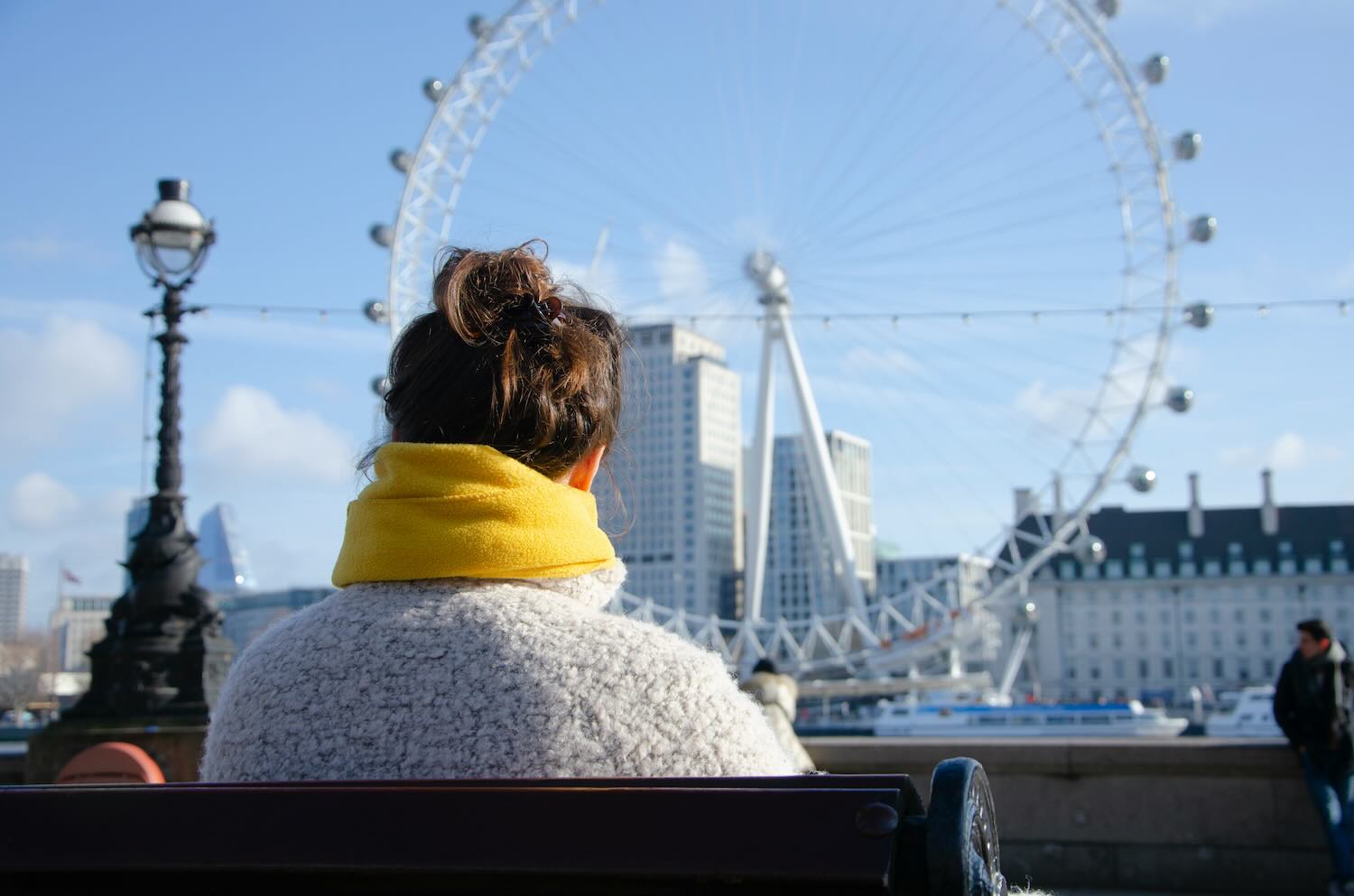
Winter walks in London are better than you would expect, and the river is the best of them. Start at Westminster and walk along the Southbank towards Tower Bridge as the lights come on. You will pass the London Eye, the Southbank Centre winter market when it is open, Borough Market and Shakespeare’s Globe. I have a full route in my self-guided Southbank walk.
For a greener winter walk, Hampstead Heath, Richmond Park and Primrose Hill all have great views on a clear cold day.
The full walk from Westminster to Tower Bridge is roughly 5km (3 miles), which takes around 90 minutes to 2 hours without stops. Allow half a day so you can warm up along the way. Start around 2.30pm so you reach the second half just as dusk falls and the bridges and buildings light up.
The river wind is the thing to prepare for. It cuts through you on the exposed stretches by Waterloo Bridge and the Tate Modern, so wear a hat and a scarf even if the temperature looks mild. Hot drinks and street food stalls along the Southbank make it easy to refuel and Borough Market is the best place to finish with something warm.
Warm Up In a Cosy Pub
A proper winter pub has a fire, a menu with pies and a corner table you can claim for hours. Order something hot, like mulled wine or a Sunday roast. For ideas, my romantic pubs in London post is full of fires and low lighting and my best British food in London guide has what to order.
What to order depends on the time of day. At lunch, go for a Sunday roast or a proper pie with mash. In the evening, a hot toddy, mulled wine or a pint of cask ale suits a cold night best. Most pubs work on a simple system: you order and pay at the bar, then find a table, so there is no waiting around to be served.
In December, book. Pubs fill up with office parties and Christmas drinks, especially on Thursdays and Fridays and the best fireside tables go early. Sunday roasts also need a reservation almost everywhere.
Do a Bookshop Crawl
Visiting bookshops (especially ones with coffee shops!) is one of my favourite things to do all year-round but especially in winter. I’ve got a list of over 30 bookshops around London you can check and build your own bookshop crawl! Or maybe head to Foyles on Charing Cross Road for a big browse in their huge flagship store and finish upstairs at their cafe with a book you just bought. You can do that solo, with a friend, on a date…
Book a West End Show or Visit the National Theatre
Winter evenings are made for theatre. Matinees on weekday afternoons are often cheaper and pantomimes in December and January are a very British tradition worth trying once. I’m not gonna lie, pantomimes are not for me…I’d rather rewatch The Book of Mormon but it is a British thing so I wanted to add it in case it’s for you.
If you are not fixed on a particular show, the TKTS booth in Leicester Square sells same-day discounted tickets for many West End productions and you can also check booking apps for last-minute deals. Evening shows usually start at 7.30pm, with matinees on some weekday afternoons and Saturdays. Pantomimes tend to run from December into January and are aimed at families, but adults enjoy them just as much for the jokes and the audience shouting back.
Book pre-theatre dinner too, because Soho and Covent Garden restaurants fill up by 6pm on show nights. Many do set pre-theatre menus that are cheaper than ordering from the full menu.
Spend an Afternoon In a Museum or Gallery
Most of London’s big museums are free, warm and open late on certain evenings. The National Gallery, the British Museum, the V&A and Tate Modern each take half a day easily. Save them for the wettest, greyest day of your trip. My rainy day in London post has more ideas.
The British Museum and the V&A suit anyone who loves history and design, Tate Modern is a good pick for modern art and views over the river and the National Gallery sits right by Trafalgar Square and is easy to combine with the Christmas lights. The Natural History Museum and the Science Museum work well if you are travelling with children.
You know an underrated free place to browse that’s really fun and gorgeous? The The Wallace Collection! It won’t be nearly as busy as the British Museum or Natural History Museum.
General entry is free at most of these, but special exhibitions are ticketed and often sell out, so book those ahead. Most museums have cloakrooms or lockers, which makes a huge difference in winter when you are carrying a heavy coat. Go as soon as the doors open or after 3pm to avoid the school groups.
Have Afternoon Tea
Winter afternoon tea is a lot more fun when it is dark by 4pm. Many hotels and tea rooms do festive versions in December such as Fortnum & Mason.
A traditional afternoon tea comes with finger sandwiches, scones with jam and clotted cream, pastries and as much tea as you can drink. Prices vary hugely, from a relaxed tea room to a grand hotel, so decide your budget first. Book weeks ahead in December, because festive sittings sell out early and tell the restaurant about any dietary requirements when you reserve rather than on the day.
Drink On a Rooftop With a Heater
It sounds odd but winter rooftop bars in London are popular.
Most winter rooftops have heaters, blankets and covered areas and some offer igloos or domes you can book for a group. The igloos usually need a reservation and often a minimum spend, so check the terms before you commit. Bars can close their terraces in heavy rain or high winds, so check the forecast and have a backup plan. Dress warmly anyway, because heaters only go so far when you are 30 floors up.
Winter Date Ideas in London
If you are planning a date, ice skating followed by a romantic pub, a Thames walk and dinner or a rooftop igloo all work well. There are more ideas in my romantic places in London guide.
A simple evening that works for most couples: skate in the late afternoon, warm up with a hot chocolate, walk along the river as the lights come on and finish with dinner at a restaurant with candles and a good table. For something slower, book a pub with a fire and make an evening of it.
Take a Day Trip
Winter is a good time to get out of the city. Bath, Oxford, Cambridge and the Cotswolds all look lovely in the cold. I have a full list in my day trips from London in winter post.
Oxford and Cambridge are each roughly an hour from London by train, Bath takes around an hour and a half from Paddington and Windsor and Brighton are easy half-day or full-day options. Leave early, because winter days are short and you will want to be back before the evening rush. Check for engineering works and strikes before you book, which are more common on winter weekends.
Fans of the wizarding world might like to check whether the Warner Bros Studio Tour is running its winter snow edition this year.
Winter Events Worth Timing Your Trip Around
- New Year’s Eve fireworks: the Thames display is ticketed in recent years, so check how to book.
- Chinese New Year: celebrations around Chinatown and Trafalgar Square usually fall in late January or February.
- Pancake Day: in February, and a great excuse to try my best pancakes in London
- Valentine’s and Galentine’s Day: see my Valentine’s Day in London and Galentine’s Day in London posts
- January sales: the big stores run them straight after Christmas
Where to Stay in London in Winter
In winter you will want to be near a Tube station and a warm place to retreat, because it gets dark early and you will not feel like a long walk back. Central areas like Covent Garden, Southbank and Kensington make it easy to pop back for a rest. If Winter Wonderland is high on your list, Kensington, Bayswater and Paddington put you close to Hyde Park.
A quick guide to the main areas:
- Covent Garden and Soho: the heart of the West End, close to theatres, restaurants and the Christmas lights. Lively and a bit noisy at night
- Southbank and London Bridge: ideal for the Thames walk and Borough Market, with a quieter feel in the evenings
- Kensington and South Kensington: next to the big museums and an easy walk to Hyde Park
- Bayswater and Paddington: handy for Winter Wonderland, and Paddington has direct trains to Heathrow and to day trip destinations like Bath and Oxford
- King’s Cross and St Pancras: the best base if you are arriving or leaving by Eurostar or heading to Cambridge
Prices spike in the two weeks before Christmas and around New Year, so book early for those dates. January and February are the best months for hotel deals.
To save money, compare weekday and weekend rates, because Sunday to Thursday is often cheaper. Pick a refundable room if your plans might change and look for places a short walk from a Tube or Elizabeth line station rather than the very centre.
For a neighbourhood-by-neighbourhood breakdown, read my Best Places to Stay in London guide.
Resources for planning winter in London
- Hotels: Booking.com
- Tours and tickets: GetYourGuide and Viator
- Trains for day trips: Omio
My Advice for Winter in London
Book the things that sell out (ice skating, Winter Wonderland slots, shows and afternoon tea) and leave the rest loose, because the weather will change your plans. Plan outdoors between 10am and 3pm and indoors after dark. And pack waterproofs before you pack anything cute. If you only do three things, make them the Christmas lights, a Thames walk at dusk and a long lunch in a pub with a fire.
For more of the city, start with my London travel guide or my London food guide.
FAQ: Winter in London
Yes. Winter is one of the best times for atmosphere, with festive lights, ice rinks, theatre and cosy pubs. Hotels are also cheaper outside the Christmas weeks. The trade-offs are the cold, the rain and short days.
Cool, damp and grey. Temperatures usually sit between about 2°C and 9°C (36°F to 48°F), with rain on many days and snow only occasionally.
Winter is 21 December to 21 February by the calendar. In practice, cold and dark weather runs from around November to March. In some years, even April saw cold weather!
Dress in layers with a waterproof coat, thermals, waterproof shoes and a scarf, hat and gloves. Places indoors are well heated, so you will want to peel layers off.
Sometimes, but not often. In 20 years of living in London, I think I can count on my two hands the winters that saw snow. If it does snow, it’s quite slippery so choose the right shoes.
Christmas lights, ice skating, Winter Wonderland, winter light festivals, Thames walks, West End shows, museums, afternoon tea and pub lunches. You can also take day trips to places like Bath and Oxford.
It is cheaper in January and February than in summer or December. Hotels and flights tend to drop after New Year, although prices rise around Christmas and New Year.
Three to four days covers the highlights without feeling rushed. Add one more if you want a day trip. Short daylight hours mean you will do less per day than in summer.
Entry varies. It ranges from about £1.00 per person (available during quieter slots, typically Monday to Thursday in November) to £8.25 during peak hours. You can see more about Winter Wonderland tickets here.
Enjoyed this? You might also like: