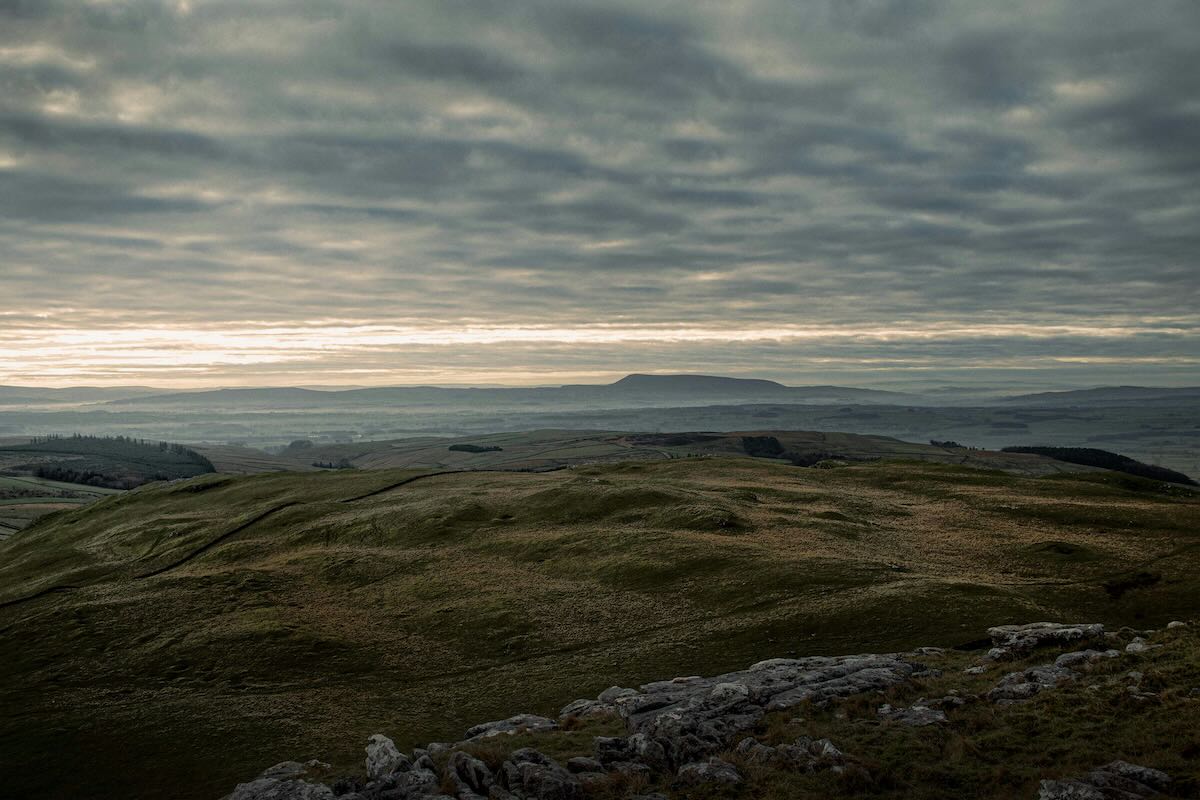
Pendle Hill sits in a corner of Lancashire most people would probably go for a hike around but not knowing the history of the Pendle Hill Witches. In 1612, twelve people from the villages around this hill were accused of witchcraft and what happened to them is still one of the best-documented and most consequential witch trials in English history.
This is for anyone who wants the real history behind the Pendle witches, not the sanitised gift-shop version, plus a practical route for walking the hill and visiting the villages connected to the trial.

Quick Guide
Location: Pendle Hill, Lancashire, between Clitheroe and Burnley in north-west England
Getting there: Nearest train station is Clitheroe, then a short taxi or drive to Barley; driving from Manchester takes about an hour
Currency: Pounds sterling (GBP)
Best time to visit: Spring through autumn for the walk, though the moorland can be exposed and boggy after rain any time of year
Don’t miss: Newchurch-in-Pendle, where the witch history and the village itself overlap most directly
Who Were the Pendle Witches?
In 1612, twelve people from the area around Pendle Hill were accused of witchcraft, most of them from two rival families, the Demdikes and the Chattoxes, who had been feuding for years before any formal accusations were made. The chain of events started small: Alizon Device, granddaughter of Elizabeth Southerns (“Old Demdike”), cursed a pedlar named John Law after he refused to sell her pins. When Law later suffered what was likely a stroke, the accusation spiralled into a wider investigation that dragged in family members and neighbours on both sides of the feud.
Old Demdike died in prison before the case reached trial. The remaining eleven were tried at Lancaster Castle between 17 and 19 August 1612 and only one was acquitted. Ten were executed by hanging, a single case that accounts for roughly 2% of all witchcraft executions in England across three centuries. The trial is so well documented because the court clerk, Thomas Potts, published a detailed account of it, “The Wonderfull Discoverie of Witches in the Countie of Lancaster“, which is still the primary source historians use today.
One detail that tends to get lost in the gift-shop version of the story: nine-year-old Jennet Device gave testimony against her own mother and siblings, evidence that would never have been admissible under normal rules but was allowed under the standards used for witch trials at the time.
If that history’s got you wanting more than a blog post can cover, Carol Ann Lee’s Something Wicked: The Lives, Crimes and Deaths of the Pendle Witches is worth picking up before or after your visit. Lee treats the case as true crime rather than folklore, working from Thomas Potts’ heavily prosecution-slanted 1613 account and digging past four centuries of superstition to reconstruct who the Demdike and Chattox families actually were. It also tackles two of the questions this post can’t fully answer, the truth behind Malkin Tower and where the Pendle witches were actually laid to rest.
A true crime reexamination of the 1612 Pendle witch trials by Sunday Times bestseller Carol Ann Lee. Moves past the single prosecution-biased source most retellings rely on to reconstruct the real lives of the accused and investigates the enduring mysteries of Malkin Tower and the witches' final resting place.


The Walk: Pendle Hill from Barley
The standard route up Pendle Hill starts from the car park in Barley, a small village at the foot of the hill with a pub, a cafe and enough parking to make it the obvious starting point. The circular route from Barley to the summit and back is around 5 miles with roughly 380 metres of elevation gain and takes most walkers about 2 hours 20 minutes at a steady pace, longer if you’re stopping for the views or the sculpture trail on the way.
The summit sits at 577 metres and the final push up is steep enough that it counts as a proper climb rather than a stroll. Expect some rugged, exposed terrain near the top rather than a smooth path throughout. Good boots matter here, the moorland stays wet well after rain.
On a clear day the view from the top stretches across Lancashire and into the Yorkshire Dales.
YOU MIGHT ALSO LIKE: The Best Witchy Places to Visit in the UK
The Pendle Sculpture Trail
About a mile from Barley car park, with one uphill stretch on the way, is Aitken Wood, home to the Pendle Sculpture Trail. Four artists have contributed pieces inspired by two themes: the 1612 witch trials, including sculptures depicting the witchfinder and figures from the case and the natural world of the woodland itself, including carved woodland creatures. It’s roughly another mile of walking once you’re in the wood and it works well as a detour on the way up or down the main route rather than a separate trip.
Newchurch-in-Pendle: Alice Nutter’s Grave and Witches Galore
Newchurch-in-Pendle is the village most directly tied to the witch trial story. St Mary’s Church, rebuilt in 1740, has a carved eye set into its tower, popularly said to have been placed there to ward off evil after the trials. The Nutter family grave in the churchyard is where Alice Nutter, one of the ten executed, is believed to be buried.
The village is also home to Witches Galore, a shop given over entirely to witch-themed gifts and souvenirs, which is either exactly your thing or not at all, but it’s a fixture of the area regardless.
DISCOVER THE UK’S WITCHIEST PLACE: Burley Witch Village
Roughlee: The Alice Nutter Statue
A short distance from Newchurch, the village of Roughlee has a statue of Alice Nutter, installed in 2012 on the 400th anniversary of the trials, standing along Blacko Bar Road. Unlike most of the other Pendle witches, Nutter came from a relatively wealthy family, which has made her case one of the more debated among historians. Some theories suggest she was caught up in the accusations for reasons that had more to do with land and religion than witchcraft itself. I mean… wasn’t most witch hunts a façade for actual land-grabbing and the likes?! Or punishing women for a variety of arbitrary reasons? (much like today…)
Pendle Heritage Centre, Barrowford
If the weather turns or you want the fuller history indoors, the Pendle Heritage Centre in Barrowford has a museum with exhibits on the witch trials and a short film, alongside gardens worth a wander if the sun’s out. It’s a good add-on to the walk rather than a replacement for it as most of what makes Pendle Hill worth visiting is outdoors.
A Note on Malkin Tower
If you’ve searched for “the Pendle witches’ cottage” or seen references to Malkin Tower, the home of Demdike and Alizon Device, it’s worth knowing upfront that there’s nothing to visit. Despite the name, it was likely a simple cottage rather than an actual tower and its exact location was never recorded. The only historical reference places it vaguely “somewhere in the Forest of Pendle.” Several sites have been proposed over the years, but none confirmed. It’s often confused with the tower on top of Blacko Hill, a folly built in 1891 by a local grocer, which is a real, visible landmark but has no connection to the witch trials at all.
Getting Around
Pendle Hill and the surrounding villages are spread out enough that a car makes this far easier than relying on public transport. The walk between Barley, Newchurch and Roughlee alone is a few miles. If you’re coming from further afield, the nearest train station is Clitheroe, from where you’ll need a taxi or a pre-booked transfer to reach Barley.
Where to Stay
Clitheroe is the most practical base if you want somewhere with a proper choice of places to eat and stay while still being a short drive from Barley. Barley itself has limited accommodation but puts you right at the start of the walk, worth it if you want an early start on the hill before the day trippers arrive.
ICYMI: Most Magical Places to Visit in Scotland
FAQ: Pendle Hill Witches
577 metres at the summit.
The circular route from Barley takes around 2 hours 20 minutes for most walkers, covering about 5 miles with 380 metres of elevation gain.
The 1612 Pendle witch trials, one of the best-documented witch trials in English history, in which ten of the twelve accused were executed.
Twelve people from the villages around Pendle Hill, mostly from the Demdike and Chattox families, accused of witchcraft in 1612. Ten were executed, one died in custody before trial, and one was acquitted.
It was real, the home of two of the accused, but its exact location was never recorded and nothing remains today. It’s often confused with the unrelated 1891 tower on Blacko Hill.
Most walkers start from the car park in Barley, which also has a pub and a cafe.
If witch history and folklore are your thing, I’ve got some other guides that might interest you here:
- Witchy and Mystical Places Across the UK
- Most Haunted Places in Europe
- Magical Places in Scotland
- Witchy Edinburgh
- Most Magical Places to Visit in Cornwall