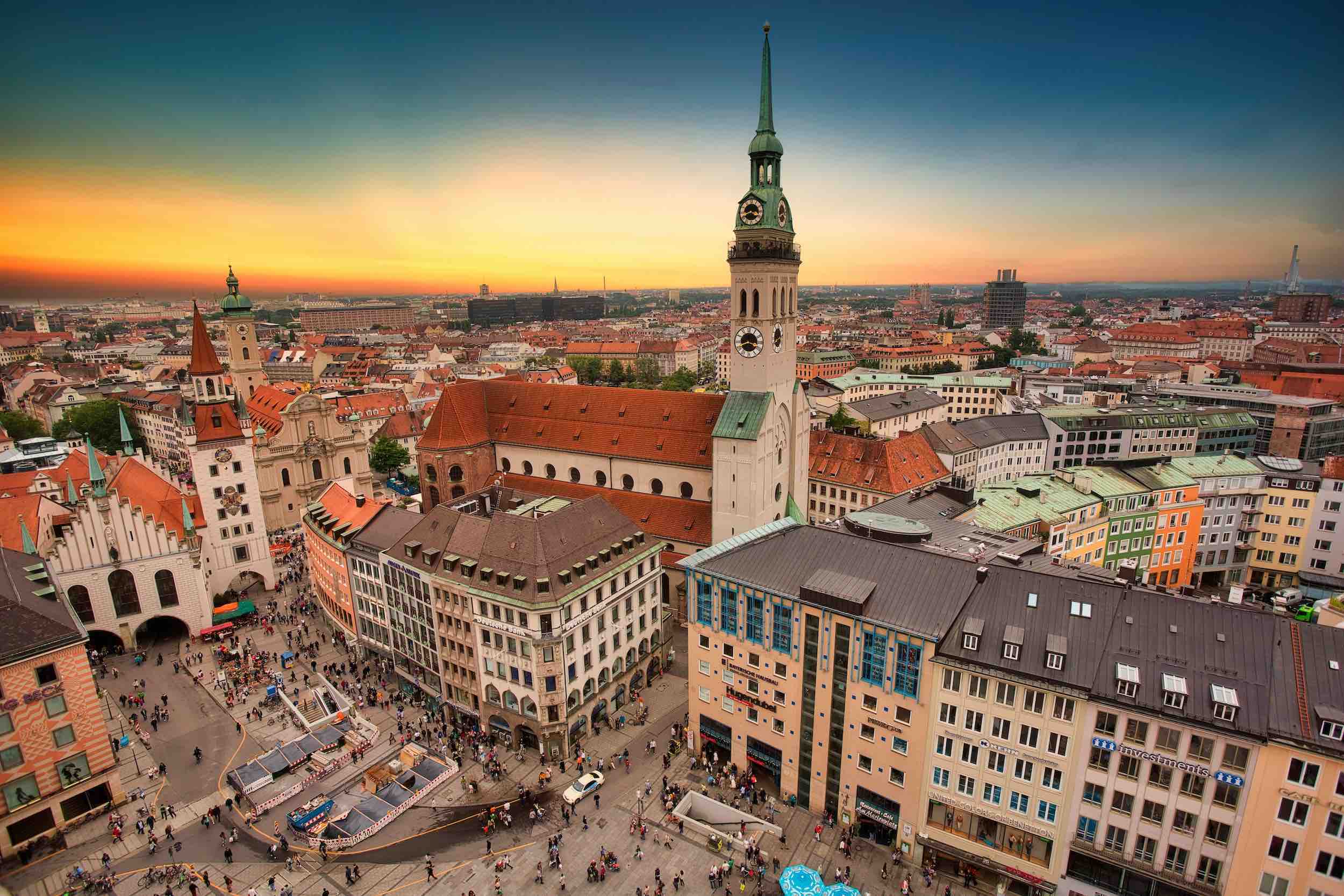
This is a Munich travel guide.
This post contains affiliate links, meaning I may earn a small commission if you make a purchase through them at no extra cost to you. This website is reader-supported and by using these links you help support my work and I truly appreciate it.
Thank you for your support!
The first time I went to Munich was during the World Cup in Germany in 2006. Brazil was playing Australia there, I had some days off from my au pair job and a bunch of Brazilian friends and I met up in the city. One of the au pairs we knew lived nearby. Her host family was going to be out of town and they let us all stay in their guest house.
It was a hot summer, we had hardly any money but also not a care in the world (we were about 19, 20!). We spent most of our time either at the FIFA Fan Fest or around the Marienplatz area, where live music and dancing in the streets made it all feel a bit magical. I didn’t really see the city properly and for some reason I convinced myself I didn’t love it because Berlin was so much cooler (I was going through a phase!).
Well. Since then, although Berlin will always have a spot in my heart, I’ve returned to Munich several times, even for another sporting event, the NFL game! And I can say with full confidence now: I really love that city. Bavaria in general is stunning and Munich deserves way more than the reputation it sometimes gets as “just” an Oktoberfest destination.
If you want to learn about the historical atrocities of the past, Munich is an important stop, but Berlin is unmissable for this too. Either way, it’s important to remember, but I’ll leave the heavier reflections to one side for now and get into the actual planning.
Quick Guide to Munich
- Where to stay: Altstadt for classic sights, Schwabing for artsy cafes, Glockenbachviertel for nightlife
- Main attractions: Marienplatz, English Garden, Nymphenburg Palace, Viktualienmarkt, Residenz Museum
- How to get there: Munich Airport with direct S-Bahn into the city; high-speed trains from Berlin, Frankfurt and Vienna
- How to get around: U-Bahn, S-Bahn, trams and bikes; consider a Munich City Card for unlimited transport and discounts
- Unmissable local food: Weißwurst and pretzels, schnitzel, beer garden classics; try at least one cake like Bienenstich or Prinzregenttorte
- When to go: Spring and autumn for pleasant weather and fewer crowds; late September/early October for Oktoberfest; December for Christmas markets

Is Munich Worth Visiting?
Absolutely. Munich is a city of contrasts: baroque palaces beside beer gardens, cutting-edge art museums next to centuries-old churches. It has a laid-back Bavarian hospitality that makes it genuinely easy to enjoy and you’re not constantly fighting crowds or confusion. The centre is walkable, the public transport is excellent and even a single day can feel surprisingly full.
Whether you have one day or three, you can see a lot with smart planning.
Where to Stay in Munich
Altstadt (Old Town) is the obvious pick if you want to walk to Marienplatz, the Residenz and the main shopping streets.
Schwabing offers leafy boulevards, art nouveau architecture and a more local cafe scene.
Glockenbachviertel is Munich’s LGBTQIA+ hub, great for nightlife and indie shops.
If you’re going for Oktoberfest, Ludwigsvorstadt-Isarvorstadt is closest to the Theresienwiese grounds.
Search hotels in Munich on Booking.com and book early if you’re visiting during Oktoberfest or Christmas markets. Rooms go fast and prices spike significantly.
How to Get to Munich
Munich Airport (MUC) is around 45 minutes from the city centre on the S1 or S8 S-Bahn trains, which run every 10 minutes. Long-distance trains connect Munich easily to Berlin, Frankfurt and Vienna. The rail connections here are genuinely great! But don’t forget to book your train tickets in advance for cheaper fares.
Once you’re in the city, use the integrated U-Bahn, S-Bahn, tram and bus network. A Munich City Card is worth it if you’re doing more than a couple of journeys and it also gives you discounts at major attractions. The city is also bike-friendly and many hotels offer rentals.
Munich Travel Tips for First Timers
- Book top attractions in advance, especially during Oktoberfest and the Christmas market season. Queues for places like Neuschwanstein can be brutal without a timed ticket but you can get a skip-the-queue ticket here.
- Carry cash. Smaller bakeries and beer gardens often don’t take cards and, trust me, you will want to stop at the bakeries.
- Wear comfortable shoes. You’ll walk a lot, especially in the city centre and the English Garden.
- Check last train times if you’re staying out late; public transport runs well but doesn’t run 24 hours everywhere.
- Join a walking tour. Munich’s history is rich and layered; having a guide makes a real difference. I’d especially recommend this for the historical sites.
Top Things to Do in Munich
Marienplatz
The heart of the city. The famous Glockenspiel clock tower puts on its performance at 11am and noon daily. Worth timing your morning around it! The square is also the best place to get oriented before exploring on foot.
The Residenz Museum
Once home to Bavarian monarchs, the Residenz has opulent rooms and an impressive treasury collection. It’s one of those places that takes longer than you expect but in a good way.
Nymphenburg Palace
A baroque estate with sweeping gardens just outside the centre. Beautiful in spring and summer when the gardens are in full bloom.
The English Garden
One of the largest urban parks in Europe. Beer gardens, open lawns, and, really, surfers on the Eisbach river. It sounds like a joke until you see it. Don’t miss it. I’ve got a video of it somewhere… will share it on Tiktok these days.
Viktualienmarkt
A historic open-air food market where you can pick up Bavarian cheeses, sausages, fresh bread and pastries. Great for breakfast or a slow morning wander. I love walking around there! It’s open Monday – Saturday 8am – 8pm. (Germany doesn’t really function commercially on Sundays, even in big cities. It’s rest day!)
Book a Munich walking tour or food experience on GetYourGuide. I highly recommend doing at least one guided experience, especially if it’s your first time.
Munich Beer Gardens: What You Actually Need to Know
Hofbräuhaus is the most famous so yes, it’s usually packed. But the food is honestly the same as what you’ll get elsewhere, so if you want a more relaxed experience, there are plenty of excellent alternatives. Augustiner Keller is a favourite (genuinely great atmosphere) and Chinesischer Turm in the English Garden is a classic for sunny afternoons. Ratskeller near Marienplatz is another solid option.
Go where feels right. The beer garden experience is the thing, not the specific venue.
Munich at Christmas
The Christmas markets open in late November and run until Christmas Eve. The main Christkindlmarkt is at Marienplatz, but the smaller markets dotted around the city are worth seeking out. The Medieval Market near Odeonsplatz and the Pink Christmas Market in Glockenbachviertel are both lovely.
Mulled wine, roasted chestnuts, handmade gifts. It’s everything the Christmas market cliché promises and it actually delivers.
Find accommodation for Munich Christmas markets on Booking.com (Oktoberfest time and December book out quickly!)
What to Eat in Munich
Weißwurst with sweet mustard is a morning staple (yes, morning. That’s tradition). Schnitzel for lunch. Apple strudel or Kaiserschmarrn for dessert. For fine dining, Tantris and Dallmayr are the most celebrated options. For street food-style bites, Viktualienmarkt is your best bet.
And please, at minimum, get one cake. Bienenstich (my partner’s favourite) or Prinzregenttorte (my favourite!). You’ll thank me.
Day Trips from Munich
Munich is perfectly placed for day trips:
- Neuschwanstein Castle: the fairytale castle you’ve definitely seen in photos. About two hours by train and bus from Munich. Stunning, worth the trip, but pre-book your timed entry ticket. You can go with a tour group from Munich but I’d suggest taking the train to Füssen and exploring this beautiful town before hopping on the bus to the castle. This also gives you more time to explore the area surrounding the castle which is stunning (think lake + mountains but no need to visualise, I’ll pop a photo further down!)
- Dachau Concentration Camp Memorial Site: a sobering and important visit, about 35-40 minutes from the centre by public transport.
- Salzburg, Austria: under two hours by train, the land of Mozart has a very different feel and absolutely worth it (although I’d suggest going for a couple of days and popping over to Füschlsee to walk around this gorgeous lake – the hike takes about 3 hours!)
You can do all of these independently on public transport. I’ve taken the train to both Dachau and Füssen (the nearest station to Neuschwanstein). From Füssen, you’ll need a bus or taxi to the castle (around 40 minutes), or you can walk. If the latter, it’s about 1.5 hours but genuinely pretty. If you’d rather not navigate it yourself, group tours are a great option like the ones below.
Book a Neuschwanstein day trip from Munich on GetYourGuide:
- This tour only gives you about 30min at the castle but it takes you to more stops like Linderhof
- This tour gives you longer at the castle and fewer stops
Take cash for both! You can pay for castle entry fee (which is not included in this tour’s ticket) the morning of the trip. You might also want to pay for the ride from the bottom of the castle to the top (it’s hilly, but gorgeous!)
I’ve actually written a blog post about day trips from Munich recently if you want more ideas and details!
FOR MORE BAVARIA: Best Day Trips from Munich for History and Gorgeous Scenery

Munich Itinerary: One Day
- Morning: Marienplatz and the Glockenspiel, then Viktualienmarkt for a traditional Bavarian breakfast
- Afternoon: Residenz Museum or Deutsches Museum if you’re into science and technology
- Evening: Beer garden like the famous Hofbräuhaus or Augustiner Keller
Munich Itinerary: Three Days
- Day 1: Marienplatz, Viktualienmarkt, Residenz Museum, evening in a beer garden
- Day 2: Nymphenburg Palace, Olympic Park and BMW Museum, stroll through Schwabing
- Day 3: Day trip to Neuschwanstein, Dachau or Salzburg using the Bayern Ticket on Deutsche Bahn
What to Pack for Munich
The right packing depends on the season, but a few things hold year-round:
- Comfortable walking shoes (non-negotiable)
- A layer for evenings; even in summer, it cools down
- A compact day bag for markets and day trips
- Cash, since smaller places often don’t take cards
Practical Info
- Language: German is official, but English is widely spoken
- Currency: Euro. Carry cash, especially for bakeries and smaller beer gardens
- Getting around: Munich City Card is great value for multiple journeys and attraction discounts
- Safety: One of the safest major cities in Europe, but stay mindful of your belongings in crowded areas
- Best time to visit: Spring and autumn for mild weather and thinner crowds; late September for Oktoberfest; December for Christmas markets
Final Thoughts
Munich won me over slowly and now I think it’s one of the best city breaks in Europe (although I do count the Füssen/Neuschwanstein visit as part of it). It’s got history, food, great day trip options and a pace that doesn’t feel exhausting. Whether you’re planning a long weekend, a beer garden crawl, a Christmas market trip or a base for exploring Bavaria, it genuinely delivers.
Ready to plan your Munich trip?
Enjoyed this guide? Pin it for later and share it with someone planning a Germany trip!
More Germany and Europe content:

This was a Munich travel guide.