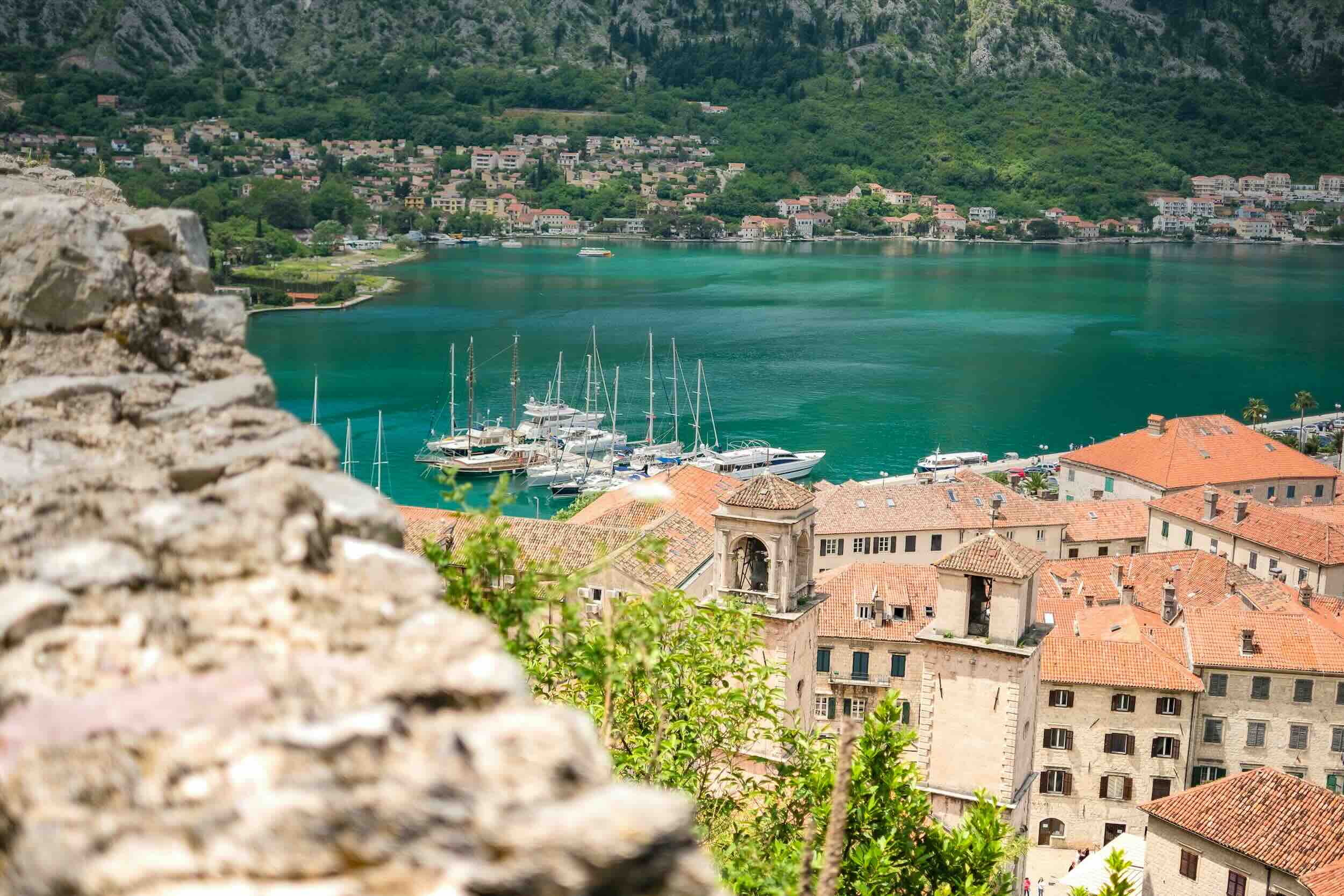
This post aims to answer the question “is Kotor worth visiting?”.
This post contains affiliate links, meaning I may earn a small commission if you make a purchase through them at no extra cost to you. Using these links helps support my work and I truly appreciate it if you choose to do so.
Thank you for your support!
Short answer: yes. Absolutely, unequivocally yes. But with one important caveat and I’ll get to that.
I visited Kotor as part of a broader Balkans road trip, driving from Albania through Montenegro with a hired car. The drive alone along the Bay of Kotor was stunning! We had a gorgeous sunny day, it was around mid-spring so everything was SO green! And part of the way we drove by the coast and the sea on the horizon was breathtaking.
We actually stopped in Budva first and spent a night there before heading to Kotor. They were both very different! But I’ll talk more about this further down.
The Kotor Old Town is genuinely beautiful. Narrow cobblestone streets, medieval churches, cats everywhere (this is a thing! Kotor is famous for its cats and you’ll also find them in various shops and souvenirs), baroque palaces and the most impressive city walls. It reminded me a lot of Venice, which turns out to be not a coincidence at all, I learnt.

Quick Guide to Kotor
- Location: Bay of Kotor, southwestern Montenegro
- Getting there: Fly into Dubrovnik or Tirana and drive; or fly into Podgorica
- Currency: Euro (Montenegro uses the euro despite not being in the EU yet)
- Language: Montenegrin but English is widely spoken in tourist areas
- Best time to visit: May, June or September; great weather with fewer crowds than peak summer
- Don’t miss: The Old Town walls, the fortress hike, a boat tour on the bay, Budva and Sveti Stefan nearby
- How long do you need: Two nights minimum to see Kotor properly and do a day trip
A Bit of the History of Kotor (Which Explains Everything)
The Venice comparison isn’t just an aesthetic one. Kotor was part of the Venetian Republic from 1420 to 1797. Nearly four centuries of Venetian domination that gave the city its typical Venetian architecture and contributed to its UNESCO World Heritage status. Before that it was a powerful independent trading city; after that it passed through Austrian, French and Russian hands before eventually becoming part of Yugoslavia and then, in 2006, part of independent Montenegro.
The walls surrounding the city are 5 kilometres long and, at the top, after climbing 1,350 steps, at 280 metres above sea level, lies the fortress of San Giovanni with an astonishing view of Kotor and the entire bay.
All of that history is visible the moment you walk through the Sea Gate into the Old Town. It feels old in the best possible way. It’s genuinely beautiful.
Things to Do in Kotor
Get Lost in the Old Town
This sounds like a cliché but it’s genuinely the best way to experience Kotor. The Old Town is a maze of thin cobblestone streets and small lively courtyards and everything is connected, so you can’t really go too wrong. Former palaces and centuries-old churches sit alongside restaurants, boutique shops and museums. Just wander.
A few things to look for:
- the Cathedral of Saint Tryphon (built in 1166)
- the Church of St Luke with its 12th century frescoes
- the clock tower on the main square
- and yes, the cats. They roam freely everywhere and locals adore them. There’s even a Cat Museum dedicated entirely to Kotor’s feline history!
Do a Walking Tour
As with every city I visit, this is my number one recommendation for your first day. Kotor’s history is genuinely rich and a local guide brings it to life in a way that wandering alone can’t replicate. Most walking tours start at the Kotor Info Desk near the Sea Gate and there are both free tip-based options and paid tours available.
Book a Kotor walking tour on GetYourGuide
Hike to the Fortress
I didn’t do the hike to the San Giovanni fortress because I didn’t have time and I regret it immensely! The route climbs 1,350 steps up the city walls with increasingly spectacular views over the bay at every turn. It’s steep and takes around an hour to reach the top but by all accounts the panorama is worth every step. Go early in the morning to avoid the heat and the crowds.
If you have time, the hike is probably the single best thing you can do in Kotor. Put it at the top of your list.
There are actually two routes: the paid one (15€) and one that goes around and is free. I’ll leave this link here from Defy Life so you can read more about the fortress and the hike.
Take a Boat Tour on the Bay of Kotor
The Bay of Kotor is possibly one of the most beautiful bays in the world! Driving along it is one thing (and scary at times!) but seeing it from the water is something else. Most tours include stops at the famous Our Lady of the Rocks island, a man-made island with a picturesque church and Saint George island nearby. Some include swim stops and most include a taste of local rakija, which tells you everything you need to know about the vibe.
Book a Bay of Kotor boat tour on Viator
Eat Well
We had a brilliant dinner at Atrium, a Japanese restaurant, which might sound like an odd choice in Montenegro but was genuinely memorable. Kotor’s food scene has come a long way and the Old Town has restaurants to suit every taste.
That said, don’t leave without trying some local Montenegrin food too. Buzara (shellfish stew) is a regional speciality, the prosciutto is excellent and if you see Krempita Kotorska, Kotor’s local version of a cream cake with an extra layer in the centre, get one. Trust me on this.
The Crowds: The One Thing to Know Before You Go
Here’s my honest caveat. Kotor is way more popular than I expected and cruise ships anchor there regularly; on some days multiple ships at once, which means thousands of additional visitors flooding into an Old Town that isn’t enormous. When we visited in early May the crowds were already more than noticeable.
In peak summer (July and August) this gets significantly worse. The Old Town can feel genuinely overwhelming when multiple cruise ships are in port simultaneously.
My advice: visit in late April/early May, early June or September. The weather is still excellent! We had beautiful warm days in early May but the crowds are far more manageable. Check cruise ship schedules online before you go if you want to plan around the worst days. Arrive early in the morning before the day trippers descend and you’ll have the cobblestone streets almost to yourself.
Despite all of this: it is still worth it. Even busy, Kotor is a beautiful place.
Beyond Kotor: Budva and Sveti Stefan
If you have a car (and I’d strongly recommend hiring one) the Bay of Kotor area gives you easy access to two other places well worth visiting.
Budva
About 25 minutes south of Kotor, Budva has its own charming Old Town with Venetian roots but feels like a completely different type of destination. I feel like Kotor had more of an international tourist crowd while Budva felt more like a holiday destination for Montenegrins themselves with beach clubs, nightlife and a lively promenade. It’s more commercial and considerably busier in summer, but the Old Town is genuinely pretty and the beaches are good. Worth a half day.
Sveti Stefan
A little further south from Budva, Sveti Stefan is one of those places that stops you in your tracks. A tiny fortified island village connected to the mainland by a narrow causeway, it’s been converted into a luxury hotel (Aman Resorts) so you can’t actually go onto the island unless you’re a guest. Although they’re closed now and scheduled to reopen this June. It would be fun to walk around it, however, the view of it from the headland above is spectacular enough. The surrounding area feels noticeably more upscale than the rest of the coast and there are some lovely spots to swim nearby. Worth stopping for a couple of hours.
Where to Stay in Kotor
We stayed inside the Old Town and loved it! I’d highly recommend it. It’s obviously the more touristy area but it’s so nice to walk around in the evenings or very early morning. We stayed in a great apartment (linked here) and our host was a digital nomad volunteering there in exchange for accommodation. It felt like a genuinely welcoming, a bit alternative kind of place. Kotor has a strong digital nomad presence and an international community that gives it a different energy to a purely tourist town.
If you’re interested in the digital nomad lifestyle more broadly, I’ve written about that too here.
Search accommodation in Kotor Old Town on Booking.com
How to Get to Kotor
By car from Albania: This is the route we took, driving from Tirana through to Montenegro. The drive along the Bay of Kotor as you approach from the north is genuinely breathtaking. I’ve written a full guide to Tirana if you’re planning a similar Balkans road trip.
By car from Dubrovnik: Kotor is only about 90 minutes from Dubrovnik, which makes it an easy addition to a Croatia trip. This is one of the most popular routes and for good reason; the coastal road is beautiful.
By bus: Regular buses connect Kotor to Dubrovnik, Budva and Podgorica. It’s a viable option if you don’t have a car, though having one gives you much more flexibility to explore the bay.
Is Kotor Worth Visiting? Final Verdict
Yes! With managed expectations about the crowds. Kotor is one of the most beautiful and best-preserved medieval towns in Europe, the bay is extraordinary and the surrounding area (Budva, Sveti Stefan, the boat tours) makes it easy to fill several days. Visit in May or September, get there early, do the fortress hike and let yourself get lost in the Old Town.
Let me know if you make it there!
Enjoyed this guide? You might also like:
- Tirana Travel Guide: What to Do in Albania’s Capital
- How to Plan a Digital Nomad Lifestyle
- Must Know Facts About Tirana: Tips for First-Time Visitors
This post aimed to answer the question “is Kotor worth visiting?”.