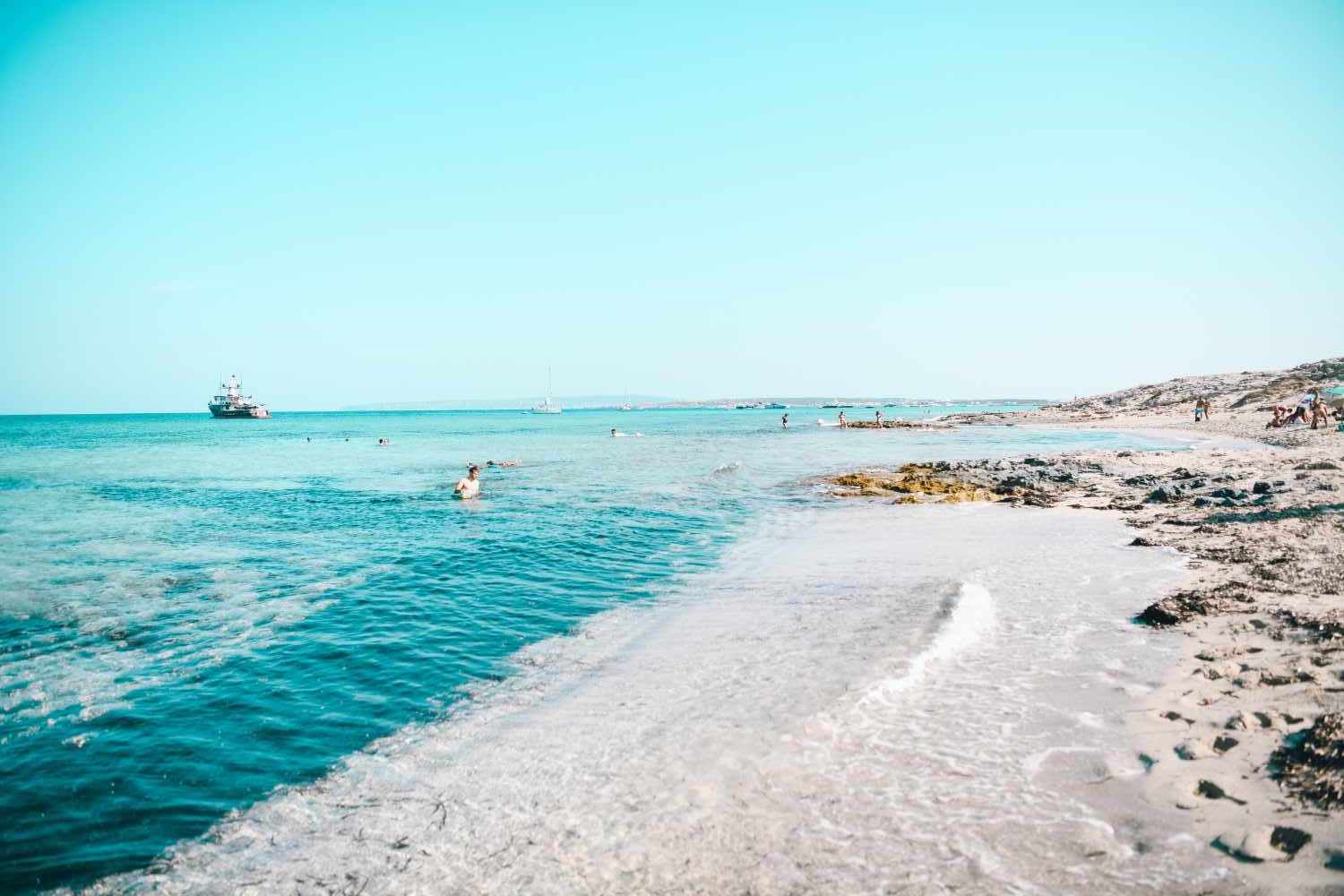
This is a post about the best sandy beaches in Europe.
This website contains affiliate links, meaning I may earn a small commission if you make a purchase through them at no extra cost to you. This website is reader-supported and by using these links you help keep it online and I truly appreciate it! Thank you for your support!
Being from Brazil, I have extremely high beach standards. I’m talking powdery white sand, warm turquoise water and enough space to go for long walks and find quieter spots. So when I started travelling to beach destinations in Europe, I was a little disappointed with so many of the small, pebbly beaches I encountered.
But here’s the thing, some European beaches genuinely deliver. Not all of them, but the ones on this list? They passed the test. From the chalky limestone coves of Greece to the dramatic red-cliffed shores of the Algarve and the buzzing sands of Ibiza, these are the sandy beaches in Europe that actually impressed me or that have made it firmly onto my list.
A quick note: some of these I’ve visited myself, others are on my must-do list based on research and trusted recommendations. I’ll be clear about which is which throughout.

Quick Guide: Sandy Beaches in Europe
| Best time to visit | May-June or September for fewer crowds and good weather |
| Getting around | A hire car is essential for a lot of these |
| What to pack | Reef-safe sunscreen, a good beach bag, water shoes for rocky coves |
| Book ahead? | Yes! Especially for boat trips to spots like Navagio and Balos |
| Don’t miss | The Algarve’s coastal walking trails between beaches |
YOU MIGHT ALSO LIKE: The Most Underrated Summer Destinations in Europe You Should Book Now
The Best Sandy Beaches in Europe
Playa d’en Bossa, Ibiza – Spain
I spent three weeks in Ibiza working as a travel nanny, sticking mostly to the smaller, family-friendly coves the family wanted to visit. They were sweet, but when I finally had a week to myself after the job ended, I headed straight to Playa d’en Bossa and thought: yes. That’s the one.
It’s the closest thing to a Brazilian beach I’ve found in Europe. Long, wide, golden sand with actual space to breathe and a lively beach bar scene, including a spot where I had the most incredible smoked salmon salad that I still think about. The beach runs for nearly three kilometres, so even when it’s busy, you can find your stretch.
Yes, Ibiza has a reputation as a party island and Playa d’en Bossa is ground zero for that. But I barely went out the entire time I was there! One evening at a loung-y kinda bar and that was it. You can absolutely do Ibiza at your own pace. The beach doesn’t care whether you danced until 6am or went to bed at 10pm.
Getting there: Playa d’en Bossa is about 5 minutes from Ibiza Town by taxi or bus. It’s one of the most accessible beaches on the island.
Stay nearby: Tropicana Ibiza Suites
Praia da Marinha, Algarve – Portugal
If you’ve read my Algarve guide, you already know how much I love this part of Portugal. And Praia da Marinha might just be its crown jewel.
Framed by dramatic orange limestone cliffs, sea arches and stacks, this beach looks almost unreal. At low tide, the sandy stretch expands and you can explore the caves and rock pools around the edges. The water is clear enough for snorkelling and marine life is abundant. The coastal walking trails above it offer some of the most breathtaking views.
My friends and I spent a couple of days in Carvoeiro as part of our Algarve trip and took an Uber to Praia da Marinha. Super easy and affordable!
Praia do Porto de Mós, Lagos – Portugal
This one is a bit of a hidden gem compared to the more famous Algarve beaches and I think that’s exactly why I loved it.
I walked there from Lagos. It’s a decent walk but absolutely doable and the further you get from town, the quieter it becomes. By the time you reach the far end of the beach, you can find completely empty stretches even in summer. The cliffs are golden, the sand is clean and soft and the whole vibe is just relaxed and unhurried.
There are some affordable restaurants and cafés near the entrance. When I visited they were genuinely cheap, though prices may have shifted more recently due to “the state of the world”, so manage expectations. Worth having lunch there before or after your beach day.
READ MORE: The Ultimate Algarve Travel Guide
⚠️ Quick note on Praia do Camilo (Lagos)
Praia do Camilo is often listed as one of the best beaches near Lagos and in good conditions, it absolutely is! I’ve been in May and it was beautiful. But when I visited in September it was covered in seaweed and it STANK! So if you’re planning around it, aim for earlier in the season. May and June seem to be the sweet spot while August and September are peak algae season!
Navagio Beach (Shipwreck Beach), Zakynthos – Greece
Tucked into a cove on Zakynthos, surrounded by sheer white limestone cliffs and accessible only by boat, Navagio is home to the rusting hull of a shipwrecked smuggler’s vessel half-buried in powdery white sand. The water is an almost violent shade of blue.
It’s on my list as I haven’t made it there yet but it’s one of those places you research once and immediately start planning around. Go in the morning to beat the crowds and look for boat tours that combine it with the Blue Caves nearby.
You can book a tour here.
There are no facilities on the beach, so pack everything you need.
Playa de Ses Illetes, Formentera – Spain
Formentera is one of the most unspoiled, beautiful places I’ve been to in Europe and this beach is the centrepiece. The water is the kind of clear, shallow, warm turquoise that makes you not want to leave. The sand has a faint pinkish tint and the whole setting is protected as a nature reserve, which means development is minimal and it stays pristine.
You get there by ferry from Ibiza, a perfect combo with a trip to Playa d’en Bossa if you’re spending a week on the island.
There are a handful of chic beachside restaurants serving fresh seafood. Bring cash and a picnic as backup; it gets busy in peak season.
Elafonissi Beach, Crete – Greece
Elafonissi is technically a small island connected to the southwest coast of Crete by a shallow lagoon, which means you wade out to it rather than taking a boat. The beach’s most iconic feature is its pink-hued sand, created by crushed shells and coral.
The water is warm, shallow and calm, ideal for families but peaceful enough for solo travellers too. It’s part of a protected area so it retains a wild, natural feel and there are basic amenities like sunbeds and kiosks. Pair it with a drive along Crete’s dramatic southwest coast for a proper day out.
Balos Lagoon, Crete – Greece
Another Cretan stunner and one that’s firmly on my list. Balos Lagoon is where white sand and turquoise water meet in a setting that genuinely looks like it belongs on another planet.
Getting there takes some effort, either a rough drive along an unpaved road followed by a short hike or a boat trip from Kissamos, but from everything I’ve read and seen, it’s completely worth it. The shallow, warm water is perfect for paddling and the overall vibe is otherworldly. You can book a boat trip here.
READ MORE: The Best Beaches Near London by Train (Including One with Actual Sand)
Baia delle Zagare, Puglia – Italy
Puglia doesn’t get nearly enough credit as a beach destination and Baia delle Zagare is one of its best-kept secrets. Hidden along the Gargano coast in southern Italy, this secluded cove is framed by white cliffs and surrounded by fragrant citrus trees (hence the name; zagare means orange blossoms).
Access is limited. You’ll either need to stay at a nearby hotel or walk a long path down but that’s partly what keeps it quiet. The water is emerald green and the sand is soft and clean. It’s a place for those who want beauty and serenity in equal measure. Pour yourself a glass of local Primitivo wine while you’re at it. It’s been a while since I’ve been there but I can still taste the wine and steak I had!
Plage de Palombaggia, Corsica – France
Corsica is France’s wildcard and Palombaggia is its most famous beach. Fine white sand, crystal-clear water and a backdrop of umbrella pines that makes the whole thing look like a painting.
It’s near Porto-Vecchio so it’s not hard to reach but it avoids the truly overcrowded feeling that hits some Mediterranean beaches, especially outside August. There are facilities, sunbeds and beachfront cafés serving Corsican wine and charcuterie. What more can you ask for, right?!
La Pelosa Beach, Sardinia – Italy
La Pelosa near Stintino is the beach that makes people double-check whether the photo has been edited. The turquoise water and white sand are protected by a reef and a small offshore island that keeps the water calm and glassy.
Because it’s so popular, there are now access limits and rules in place. You’ll want to book in advance and arrive early. It’s worth the planning. Also worth hiring a car to explore more of Sardinia’s spectacular coast while you’re there.
Plage de l’Espiguette, Occitanie – France
This one is for the beach purists. Located near Le Grau-du-Roi in southern France, Plage de l’Espiguette stretches for over 10 kilometres with wide white sand, rolling dunes and zero development. No beach clubs, no cocktail menus, no posing, just wind in the dune grass and if you’re lucky, a kite surfer in the distance.
It’s a protected area and it shows. The sheer size means you can always find a quiet spot, even in peak season. Clear, shallow water makes it ideal for swimming. This is the kind of beach that locals actually go to and that’s always a good sign.
Tips for Visiting Europe’s Sandy Beaches
Travel in shoulder season if you can. May, June and September offer great weather with far fewer crowds at almost every beach on this list. Hire a car for the Algarve, Sardinia, Puglia and Crete, as public transport simply doesn’t reach most of these spots. If you’re planning to visit Navagio or Balos, book your boat trip in advance. Both require boat access and popular tours sell out fast in summer. Use reef-safe sunscreen wherever possible, particularly at protected beaches, and check conditions seasonally. Some Algarve beaches can get seaweed-heavy in late summer.
FAQ: Sandy Beaches in Europe
Plage de l’Espiguette in southern France and Playa de Ses Illetes in Formentera are consistently rated among the sandiest and most pristine. Elafonissi in Crete is famous for its unique pink-tinged sand.
Crete punches above its weight with Elafonissi and Balos Lagoon both on the same island. Zakynthos (Navagio/Shipwreck Beach) is also exceptional. For a different vibe, Milos has some spectacular lesser-known beaches.
September is still warm across the Mediterranean but with far fewer tourists. Corsica, Sardinia, the Algarve (stick to May/June for some beaches like Camilo) and Formentera are all good bets. Avoid anywhere known for seaweed issues later in the season.
Yes! One of the most beautiful places in the Mediterranean. The ferry from Ibiza takes about an hour and it’s a brilliant day trip or short stay. The beaches are in a protected reserve so the water quality is outstanding.
Absolutely. The beach itself is long enough that you can find a quieter spot and Ibiza as an island has far more to offer than its clubbing reputation suggests. I spent 4 weeks there and went out ONCE. Not even to a club, just a bar.
The Algarve has some of the best in the country! Praia da Marinha is often cited as the most beautiful, while Praia do Porto de Mós near Lagos is a brilliant choice if you want more space and fewer tourists.
This was a post about the best sandy beaches in Europe.