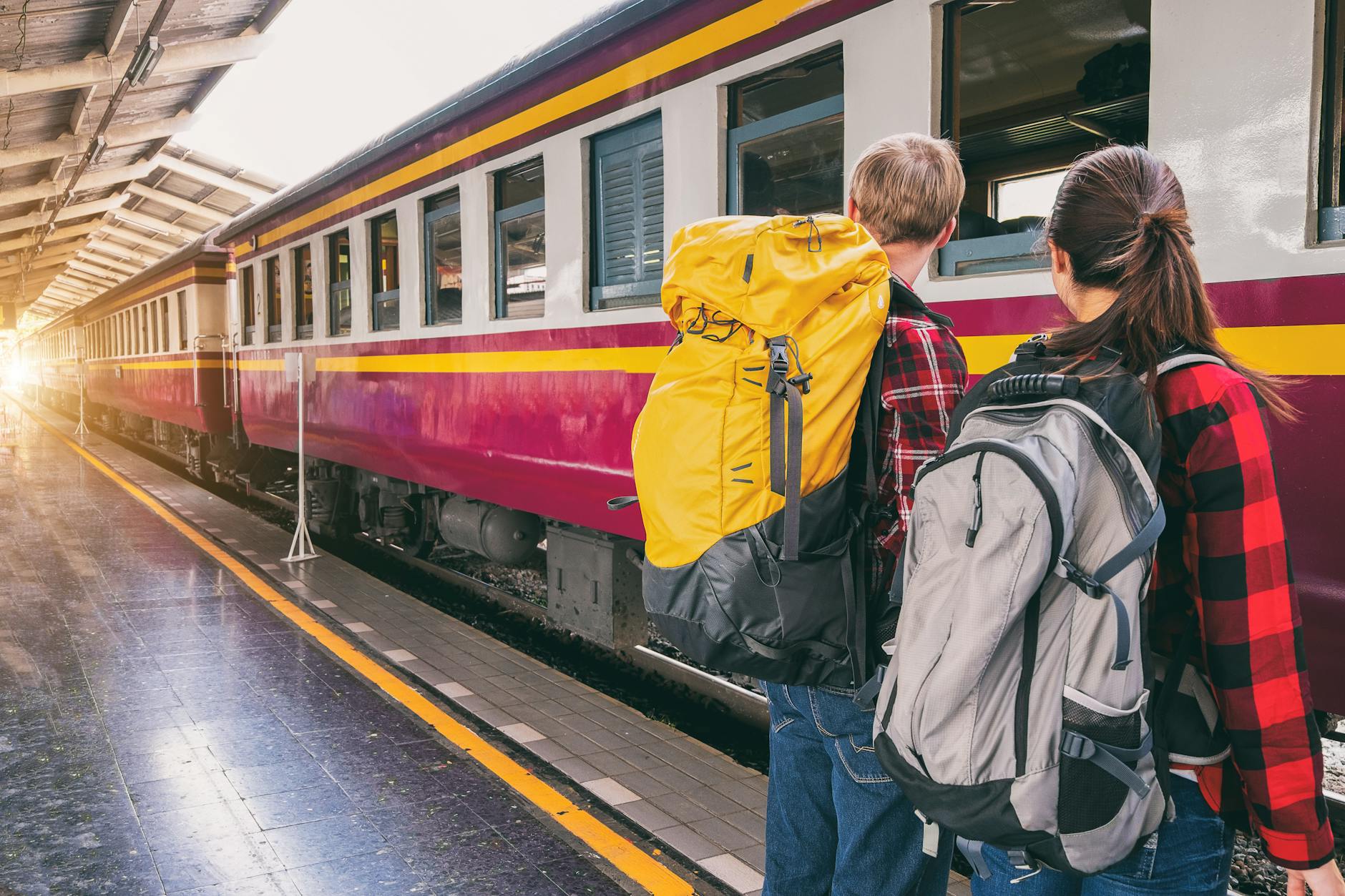
This is a post about backpacking Europe on a budget.
This post contains affiliate links, meaning I may earn a small commission if you make a purchase through them at no extra cost to you. Using these links helps keep this blog alive and I truly appreciate it if you choose to do so. Thank you for your support!
Two decades living in Europe I’ve travelled around extensively, including a good chunk of it done properly broke; the kind of broke where you’re having to choose whether to eat a croissant for breakfast or buy a coffee instead (at Berlin’s main train station where I had spent the night…). I’ve slept on night buses and train stations, made friends from all over the world in hostels and once ended up on a BlaBlaCar ride through Croatia sharing a burek with strangers because it was much cheaper than the other alternatives.
If you’re planning your first (or fifth) budget trip around Europe, this is the guide I wish someone had handed me before my move. I’m covering exactly how I’ve got around cheaply, where I’ve stayed for next to nothing, the free things that made trips feel full instead of frugal and the mistakes that cost me money so you don’t have to repeat them. Plus a rough sense of what it all costs by region, so you can plan with realistic numbers.
Quick Guide: Backpacking Europe on a Budget
💰 Realistic daily budget: 35-50€ in Eastern Europe, 70-100€+ in Western Europe
🎒 Best for: First-time backpackers, gap years, career breaks, solo travellers
🚆 Getting around: Interrail/Eurail, budget airlines, FlixBus and BlaBlaCar
🛏️ Where to stay: Hostels, Booking.com for private rooms, Couchsurfing
🗓️ Best time to go: April-May or September-October for lower prices and fewer crowds
⚠️ Heads up: Western Europe and peak summer will eat your budget fastest; plan around both if money’s tight

How Much Does It Actually Cost to Backpack Europe?
This is the question I get asked most and it depends entirely on where you’re going, so let’s break it down by region. These are rough daily figures covering a hostel dorm bed, food, local transport and one paid activity, based on current backpacker cost trackers and my own spending on the road.
| Region | Daily budget (per person) | What that gets you |
|---|---|---|
| Eastern Europe (Balkans, Poland, Hungary, Romania) | €30–50 | Hostel dorm, local food, public transport, one attraction |
| Southern Europe (Spain, Portugal, Greece, Italy) | €40–80 | Similar, with higher accommodation costs in peak season |
| Western Europe (France, UK, Netherlands, Germany) | €70–110 | Hostels here run higher and food/transport cost more |
| Northern Europe (Scandinavia, Iceland) | €80–120+ | The most expensive region by a distance; plan carefully |
For a rough total: two months mixing Eastern and Western Europe, staying mostly in hostels and cooking a fair amount of your own food, lands most people somewhere between €2,500 and €4,000, not including flights in and out. If you lean harder into the Balkans and Eastern Europe and travel slower, you can bring that down significantly.
The Most Affordable Countries to Backpack in Europe
If your budget is genuinely tight, where you go matters more than how carefully you budget. These are consistently the most affordable:
- The Balkans (Albania, Bosnia and Herzegovina, Montenegro, North Macedonia, Serbia): hostels from around €10 a night, cheap food and stunning coastline that costs a fraction of Croatia’s. (I have to say, I think Montenegro’s gone a bit up in price recently…I found it closer to Western Europe prices when I went to Kotor last time)
- Poland and Hungary: excellent hostels, brilliant food and cities like Krakow and Budapest still feel like a bargain compared to countries like the UK and the Netherlands
- Romania and Bulgaria: some of the lowest costs on the continent, with underrated cities like Sofia and Cluj-Napoca
- Portugal: the cheapest option in Western Europe by some margin, particularly outside Lisbon and Porto and off-season
If you’re building a route on a strict budget, weighing it towards these countries and using them as your “expensive city recovery” stops (a few cheap days after Paris or Amsterdam) makes a real difference to your total spend.
Choose Your Travel Season Wisely
The time of year you travel affects your budget more than almost anything else. Summer (June to August) brings higher prices, packed hostels and the most expensive flights of the year. Shoulder season — April to early June, or September to November — gets you fewer crowds, cheaper accommodation and genuinely nicer weather in a lot of places. Winter is the cheapest of all, but you’re trading it for shorter days and colder temperatures depending on where you’re headed.
Personally, I’d pick October or April/May over July/August every time. Summer means competing with school-holiday crowds and other backpackers doing the exact same route as you and I say that as someone who travelled during my own uni breaks (WITH families as a nanny! HA!). It’s also SO crowded!
Set a Realistic Budget Before You Go
Divide your total budget by the number of days you’re travelling and that’s your daily number… except it’s not quite that simple, because if you don’t know what things actually cost, you can’t budget properly for them. And, like we’ve talked about above, different countries, different budgets. I don’t know how I managed to go around Europe for so long knowing anything about budgeting. I literally used to spend money like there was no tomorrow… don’t do that, friends. That’s stupid.
Before you go, look up rough prices for train passes, bus tickets, entry fees and accommodation in the countries you’re visiting (the table above is a starting point). Knowing your number in advance means you’re far less likely to panic halfway through the trip when you realise you’ve spent more than planned.
I’ve got some tips further down to help you plan your trip backpacking Europe on a budget. However, I’m also going to leave this here: Nomadic Matt’s new book How to Travel the World on $75 a Day. It’s one of the most practical budget travel books out there! He’s been travelling for over a decade now (possibly 2?!) and is one of the original travel bloggers.
I’ve been following him for so long and have always wanted my own travel blog. It’s finally here and, if you’re reading this, thank you! I hope you stick around. Feel free to leave questions/suggestions in the comments at the end if there’s anything you’d like to know. I’m here to solve problems and teach you to do as I say, not as I did 😂
Written by the OG travel blogger Nomadic Matt, his new and updated budget travel bible is now available to buy.


Plan Your Transportation in Advance
Getting around Europe can be surprisingly cheap if you book ahead. Here’s what’s actually worked for me:
Eurail Pass and Interrail Pass
If you’re not a European resident, an Eurail Pass gives you unlimited train travel across 33 countries. It’s expensive upfront, but it can pay for itself if you’re covering a lot of ground quickly. If you are an European resident, the Interrail Pass offers the same deal and there’s a discount if you’re under 28.
Budget Airlines
Ryanair, Wizz Air and easyJet can be genuinely cheap if you book early and pack light enough to avoid baggage fees. Always check Google Flights alongside them too.
FlixBus
FlixBus connects most major European cities cheaply. During my uni years it was a lifeline when I had no money. It’s slower than flying, but it works:
- London to Edinburgh in around 10 hours (once for £10 and £1!!!! with MegaBus)
- London to Amsterdam in around 13 hours, twice each way
- London to Dublin in around 13 hours (£28 return, with a nap on the ferry crossing)
If you’re heading north, my Edinburgh 3-day itinerary covers exactly what to do once you arrive.
BlaBlaCar
BlaBlaCar is a ride-share app where drivers offer spare seats for a fraction of what the train or bus costs. I used it a lot while au pairing in Germany on 260€ a month. A bit like Couchsurfing, the people offering rides tend to be open-minded travellers happy to meet others doing the same thing.
One trip, I went from Zagreb to a small town in Germany with a couple I found on BlaBlaCar. My friend in Zagreb sent me off with a burek for the road, I got to practise my German with the couple the whole way and the scenery was stunning. I think I paid 45€ for the entire ride back then!
Overnight Trains and Buses
These save you a night of accommodation costs, which adds up fast on longer trips. Overnight routes I’ve taken myself:
- Berlin to Prague
- Berlin to Munich and back
- Darmstadt to Paris
- London to Amsterdam and back
- London to Dublin and back
- London to Edinburgh and back
- London to Liverpool and back
For checking train and bus schedules across all of this, I tend to use Omio to compare routes and prices in one place before booking.

Where to Stay in Europe on a Budget
Hostels
Europe has some of the best hostels in the world and a lot of them include free breakfast, free walking tours and social events that make solo travel much easier. For booking, I always check Booking.com or Hostelworld.com first to compare prices and read recent reviews before committing.
Is Booking.com Genius Actually Cheaper Than Booking Hostels Direct?
It’s worth checking both. Booking.com’s Genius programme (unlocked after a few completed stays) gives you automatic discounts and perks like free breakfast or late checkout at participating hostels and the prices are often genuinely competitive. That said, some hostels offer their own direct-booking discount to avoid platform fees, so it’s always worth a quick price comparison between the hostel’s own website and Booking.com before you confirm.
Couchsurfing
Stay with locals for free while making new friends. It’s changed a lot since I first used it, but it’s still a great way to find local company, even if you don’t end up needing an actual couch.
Host a Sister
This Facebook group connects women hosting other women. It’s great for finding a place to crash but also local company for exploring or even home swaps.
House Sitting
Look after someone’s home and pets in exchange for free accommodation. Platforms built for this can save you weeks of accommodation costs if your schedule is flexible enough. This can be really helpful if you work remotely and want to take advantage and work from different places.
Airbnb Private Rooms
Instead of booking an entire apartment, a private room within someone’s home is a much cheaper way to get Airbnb-style accommodation without the full price tag.
Volunteering for Accommodation
Workaway and Worldpackers let you work a few hours a day in exchange for free accommodation, which is one of the best ways to stretch a long trip if you’ve got time rather than money. It’s also a good way of meeting new people, not to mention the experience you can add to your CV!
Eat Well Without Spending a Fortune
Eating out every day adds up faster than almost anything else on a backpacking budget. A few things that actually make a difference:
- Shop at local markets for cheap, fresh produce
- Take advantage of free hostel breakfasts whenever they’re on offer
- Go for lunch specials rather than eating out for dinner; lunch menus are almost always cheaper for the same food
- Buy from supermarkets and cook in the hostel kitchen, then take leftovers with you for the next day
- Look out for supermarket meal deals (a sandwich, drink and snack bundled together); they’re everywhere and they’re genuinely good value
Free (and Nearly Free) Things to Do
Backpacking Europe on a budget doesn’t mean missing out. There’s an enormous amount you can do for free:
- Free walking tours run in almost every major city and I swear by them! I’ve done the Berlin one about five times with different friends, plus Budapest, Krakow, Riga, Helsinki and many others. Even in Seattle! (the couple who set it up was inspired by the European ones)
- Many museums have free entry days, usually once a month or on certain evenings
- Parks, beaches, churches and historical sites are free to explore in almost every city
For a bigger list of ways to cut costs across your whole trip, my tips and tricks guide goes further than what’s covered here.
READ MORE: 8 Tips and Tricks and Tricks to Make Your Planning Easier
Stay Connected Without Paying a Fortune for Data
Buy a local SIM card or use an eSIM like Airalo to get data across multiple countries without swapping physical SIMs at every border. Many European cities also have free wifi hotspots, particularly in cafes and hostels, so you don’t necessarily need data running constantly.
Check SimOptions for the best one for your destination.
Many European cities also have free Wi-Fi hotspots widely available too! (if you can’t find one, find a McDonald’s or Starbucks)

Student and Youth Discounts Worth Knowing About
If you’re under 26 (or a student of any age), you can get discounts on transport, museum entry and attractions across most of Europe. If you’re European, the European Youth Card offers further savings, with the age limit varying between 26 and 31 depending on the country.
Avoid Tourist Traps
Touristy areas mean higher prices across the board. Eating, staying and shopping even a few streets back from the main attractions almost always gets you better prices and a more authentic experience of wherever you are.
What to Pack for Backpacking Europe
Packing light matters more here than almost anywhere. You’ll be carrying it up hostel stairs and across cobbled streets more times than you’d like. The essentials I wouldn’t skip:
- A properly fitted 35-45L backpack rather than a suitcase
- A padlock for hostel lockers
- A microfibre travel towel (hostels rarely provide one)
- A universal power adaptor
- A portable charger for long travel days
- Packing cubes to keep everything from turning into chaos by day three
READ MORE: 13 Easy Tips for Travelling Europe on a Budget
FAQ: Backpacking Europe on a Budget
It depends heavily on region. Budget roughly 30-50€ a day in Eastern Europe and 70-110€+ a day in Western Europe, covering hostels, food, local transport and one activity. A two-month trip mixing both typically lands between 2,500€ and 4,000€ excluding flights.
Sticking to Eastern Europe and the Balkans, travelling by bus or BlaBlaCar instead of flying, staying in hostel dorms or Couchsurfing and cooking your own food rather than eating out will cut your costs the most.
Albania, Bosnia and Herzegovina, North Macedonia, Bulgaria and Romania are consistently among the cheapest, with hostels from around €10 a night and correspondingly low food and transport costs.
Both are worth checking. Booking.com’s Genius programme often unlocks real discounts, but some hostels offer a small direct-booking discount to skip platform fees, so compare both before confirming.
Two to four weeks is enough to see a solid route without rushing, but if your budget is genuinely tight, a longer, slower trip weighted towards cheaper countries often works out more affordable per day than a shorter, faster one through expensive cities.
It depends on your route. If you’re covering a lot of long-distance ground in a short time, a pass can save money. If you’re moving slowly and sticking to nearby cities, individual FlixBus or BlaBlaCar tickets are often cheaper.
Final Thoughts
Backpacking Europe on a budget isn’t about denying yourself everything, it’s about knowing where your money actually needs to go. Spend on the things that make a trip memorable and cut ruthlessly everywhere else; cheap transport, hostel dorms, home-cooked meals and free walking tours will get you further than you’d think and none of it comes at the cost of a good trip.
Enjoyed this? You might also like:

This was a post about backpacking Europe on a budget.