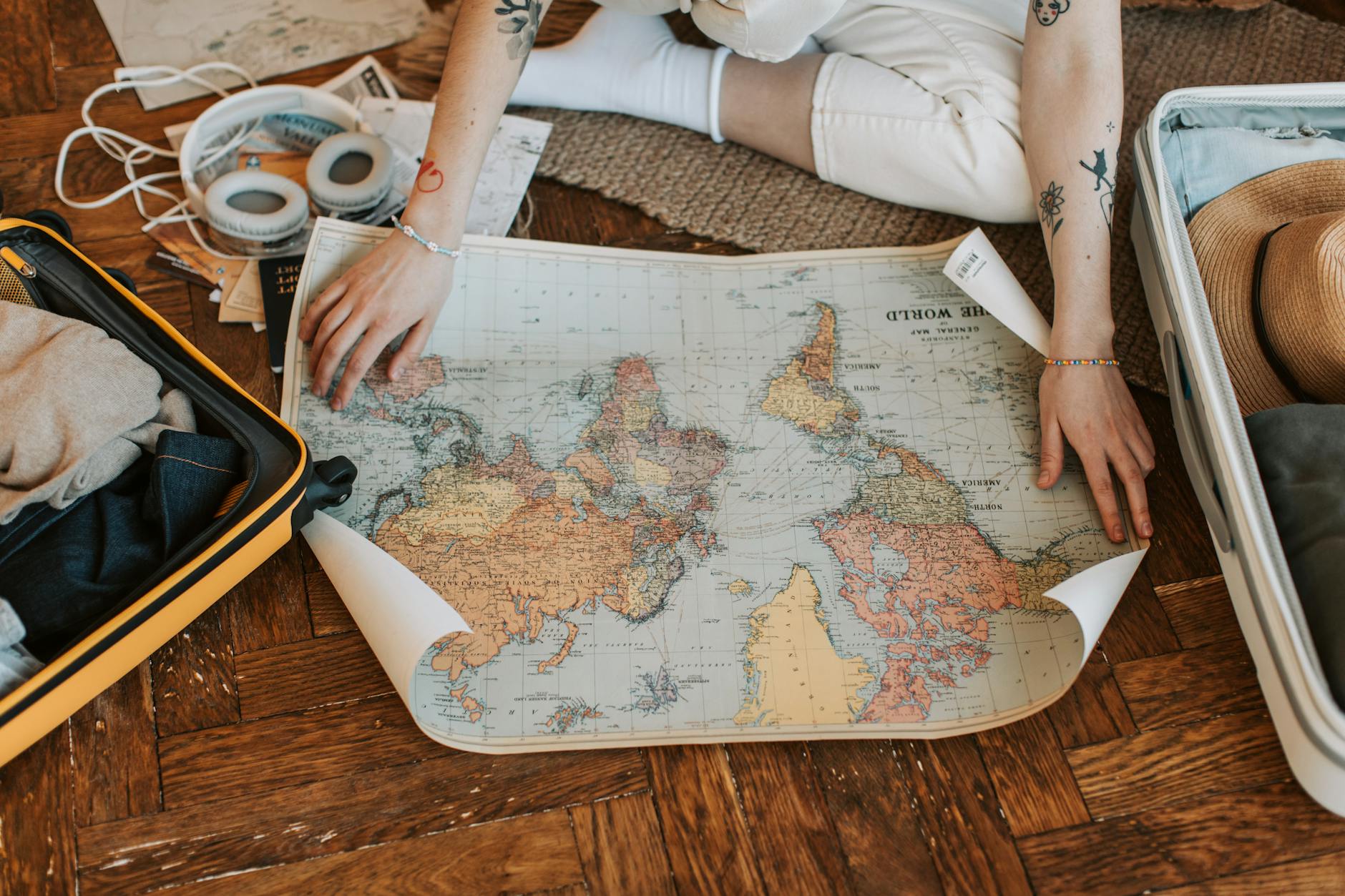
This post is about how to become a digital nomad.
This post contains affiliate links, meaning I may earn a small commission if you make a purchase through them at no extra cost to you. It helps keep this blog running, so thank you if you choose to use one.
None of my three moves abroad were planned properly. I went to the US as an au pair, then Germany as an au pair, then the UK as a student and each time I turned up without a financial cushion or a proper plan. In the US and Germany I had room and board and pocket money, I was ok (although things could’ve gone very wrong during my au pair experiences and I’d be in trouble without a safety net). In London, however, where I spent most of my time abroad, the lack of savings and planning meant working a lot, for a long time and taking whatever job I could get rather than choosing one I actually wanted until I learnt to deal with my finances, organised my life and took stock.
A few weeks ago I packed up my flat, rented it out, sold a chunk of what I owned and worked through all the practical bits people usually leave until the last minute, so I could go abroad for a while. This was the first time I actually followed a proper plan before leaving, rather than winging it and sorting it out as I went.
That’s what this guide is: the checklist I actually followed this time round. If you’re working out whether the digital nomad lifestyle is realistic for you or you’ve already decided and just need the steps in order, here’s exactly how to do it properly.

Quick Guide: Becoming a Digital Nomad
📍 Who this is for: Remote workers, freelancers and anyone whose income isn’t tied to a physical office, who want to work from abroad long-term rather than just travelling
💻 What you need first: A remote-friendly income, a plan for visas and tax and 3–6 months of savings before you go
🛂 Visas: Don’t skip this! Read The Complete List of All 66 Countries Offering Digital Nomad Visas before picking a destination
💰 Budget to set aside: At minimum, 3–6 months of living costs in your destination + a separate emergency fund
⚠️ Biggest mistake people make: Choosing a destination based on Instagram rather than cost of living, internet speed, lifestyle/culture and visa rules
🗓️ Best time to start planning: Give yourself 2–3 months minimum between deciding and leaving, longer if you need a specific visa
Before we start, I actually want to recommend a book I read last year that I’ve recommended here before several times: How to Be a Digital Nomad by Kayla Ihrig.
Kayla is a digital nomad herself and put together a super comprehensive guide. She covers all the steps you need to take, things to consider, issues to anticipate and how to prepare for them. She also shared a lot of different stories from other digital nomads around the world and their own unique experiences!
With this book, discover the incredible opportunities of digital nomadism and learn how you can travel the world while also sustaining a successful work-life. How to Be a Digital Nomad gives you everything you need to build a successful career on your terms.
This book is both a practical guide and an insightful exploration of this unique lifestyle. It includes interviews with a diverse range of remote workers, telling stories that span five decades of digital nomadism, and highlights the unique opportunities this lifestyle offers you and your career. Whether you're looking for a few months away, a working gap year or an entirely new lifestyle, this book will show you how you can take control of your career while travelling the world.


But if you’re after a crash course, here’s a step-by-step guide to help you plan your digital nomad lifestyle in 2026.
Step 1: Choose Your Destination (or Destinations)
Start by picking somewhere that actually fits your budget, your work and your life, not just somewhere that looks good in photos.
What to weigh up:
- Cost of living (Numbeo and Nomad List are both useful for a first pass)
- Internet speed, ideally checked before you commit to anything longer than a few weeks
- Visa options, including whether a proper digital nomad visa exists
- Time zone overlap, if you still need to be online for meetings (I worked from Brazil a few times and had to start at 6am instead of 10am – had many mornings of two breakfasts! 😂)
A few places worth having on your radar for 2026:
- Europe: Croatia, Estonia, Slovenia
- Asia: Thailand and Indonesia are PACKED with digital nomads. I wouldn’t recommend for various reasons, but especially so it doesn’t put more of a strain on the locals. Maybe try South Korea or Sri Lanka
- Americas: Mexico, Colombia, Brazil
Digital nomad Facebook groups and forums are useful for hearing from people already living somewhere, but take individual answers with a pinch of salt. I get asked constantly how much someone needs to live in London and I never know how to answer properly, because it depends entirely on your lifestyle. Don’t let anyone’s “I did it on £30 a week” post talk you out of building a proper emergency fund. I promise you, an emergency fund would have saved me from more than one bad job across my own moves.
I recently rented out my UK flat to go abroad for a little while and, for my Brazil leg, I asked my friend to give me a ballpark of bills and she gave me a breakdown of what she spends on rent, bills and food which was really helpful!
One thing worth untangling early: “nomad” doesn’t mean you have to keep moving. Plenty of people pick one base and stay there for a year or more on a single visa. There are no rules here beyond the ones your visa sets for you and you can always leave if it’s not working out for you.
Step 2: Sort Out Visas and Tax Before You Book Anything
This is the step people are most tempted to skip and it’s the one that causes the most damage if you do.
Digital nomad visas: A growing list of countries now offer a specific visa for remote workers rather than making you rely on tourist status. I’ve broken down all 66 countries currently offering one here.
Tax: Work out early whether you’ll owe tax in your home country, your destination or both, and get advice from an accountant who actually specialises in nomad or expat tax rather than guessing. This isn’t a corner to cut.
Pro tip: Register with your embassy once you’re there, in case you ever need them in an emergency.
Doing this properly, rather than quietly overstaying a tourist visa, matters more than people think. A friend of mine was an au pair in the US on a tourist visa, went home, then tried to apply for a new one and got turned down because immigration questioned why she’d stayed so long as a “tourist” the first time. It’s not worth the risk, especially since time spent on a proper visa can sometimes count toward future residency or citizenship applications, where a string of tourist visas won’t.
READ MORE: The Complete List of All 66 Countries Offering Digital Nomad Visas
Step 3: Build a Workspace You Can Actually Work From
However romantic the “laptop on a beach” image is, you need something more reliable than that most days.
The basics:
- A lightweight laptop and noise-cancelling headphones (here’s a decent budget option) plus a portable charger (I added a budget option for laptop but I do love my Mac!)
- A reliable VPN, especially useful for accessing home banking or streaming services abroad
- Cloud storage (Google Drive or Dropbox both work fine)
Coworking spaces: Platforms like Croissant and Workfrom help you find local coworking spaces if you need a proper desk and reliable wifi rather than working from a café every day.
If you’re still choosing what kind of remote work to do in the first place, this rundown of solid digital nomad jobs for beginners is worth reading before you get this far.

READ MORE: 16 Great Digital Nomad Jobs for Beginners (2026)
Step 4: Get Your Finances in Order
Banking: A global account like Wise or Revolut makes international transfers and everyday spending abroad far cheaper than a standard home bank card (I’ve linked my Wise here so you can get the first £500 transfer fee free!)
Budgeting: Use whatever you’ll actually stick to. Mint, YNAB, a spreadsheet or plain old Notion. I’d rather have a simple system I use every week than a complex one I abandon after a month.
Emergency fund: Aim for 3-6 months of living costs set aside separately from your day-to-day budget.
I can’t stress this one enough. Laptops die, teeth need emergency fixing, flights get cancelled at the worst possible moment… none of it is optional and none of it waits for a convenient time. Having the cash to handle it without panicking is the difference between a bad week and a bad year.
Step 5: Sort Health Insurance Before You Need It
Health is wealth! And it’s the thing we all take for granted right up until we can’t and that goes double when you’re far from home and your usual doctor.
Insurance: Providers like SafetyWing and World Nomads specialise in cover built around nomad life rather than a single holiday.
Emergency documents: Keep digital copies of your passport and insurance details somewhere secure, share them with someone you trust back home and carry physical copies of the essentials too in case your tech lets you down at the wrong moment.
Step 6: Build a Routine That Actually Works Away From an Office
Nobody warns you how much structure an office gives you until it’s gone.
Time management: Trello and Asana are popular, but you don’t need project management software to stay on top of things. Simple time-blocking in Google Calendar works just as well and sometimes even better than anything else.
Time zones: World Time Buddy is a real help if you’re juggling meetings across more than one time zone.
Pro tip: Set actual boundaries between work hours and everything else. It’s easy to let the two blur together when your office and your holiday are the same place and burnout doesn’t care that you’re somewhere beautiful. Wherever you go, make sure you build a life outside of work! Find your new favourite coffee shop, meet the locals, join a club.
Step 7: Pack Properly, Not Aspirationally
Packing light is one of those things that sounds obvious and is much harder in practice.
Tech: Laptop, portable wifi device, universal adaptor.
Clothing: Versatile pieces that work across a few different climates, rather than a full wardrobe for every possible scenario. Packing cubes are super handy to organise your luggage!
Extras: A compact first-aid kit and a backup hard drive.
If you’re heading to Europe specifically, I’ve got a full packing guide for that, including a winter-specific version if you’re travelling in the colder months.
RELATED POST: Essential Carry On Packing List: What I Actually Pack + Tips
Step 7: Pack Smart
Traveling light is a game-changer for digital nomads.
- Tech Essentials: Laptop, portable Wi-Fi device, universal adaptor.
- Clothing: Stick to versatile pieces for different climates. Also, packing cubes are SO handy!!
- Extras: Pack a compact first-aid kit and backup hard drive.
If you’re heading to Europe, I’ve got a packing guide for that (and one specifically for winter!)
Step 8: Build a Community, Because Loneliness Is Real
Nobody puts this on the inspirational packing list, but it might be the most important step here.
Online: Digital nomad Facebook groups and Meetup are both good starting points for finding people in the same city.
In person: Coworking spaces often run their own networking events, which tend to be a much easier way in than trying to make friends cold in a new city.
Pro tip: Apps like Bumble BFF exist specifically for platonic friend-finding and they work well for this.
I’ve written a longer list of ways to actually make friends abroad here, if this is the part you’re dreading most.
READ MORE: How to Make Friends Abroad: 10 Easy Tips for Expats and Travellers
Step 9: Embrace the Local Culture; Actually Engage With Where You Are
It’s easy to end up working from the same three cafés in a city and barely noticing you’ve left home. Try not to let that happen.
- Learn a handful of basic phrases in the local language at the very least
- Eat where locals eat, not just where the wifi is fastest
- Look for a cooking class or cultural workshop, both for the experience and as an easy way to meet people outside the immigrant bubble
Step 10: Plan For Emergencies; Prepare for the Things You Hope Won’t Happen
A lot of this repeats earlier steps, but it’s worth its own moment because it’s easy to file “emergencies” under “future me’s problem.”
- Save local emergency numbers in your phone before you need them
- Register with your embassy
- Have a backup plan for lost documents or a stolen bag
- Build an emergency fund!!
Step 11: Don’t Neglect Your Health
Easy to deprioritise when you’re busy exploring a new place and exactly the thing that catches up with you if you do.
Mental health: Build in proper breaks and stay in regular contact with people back home.
Vitamin D: Worth supplementing if you end up somewhere with less sunlight than you’re used to.
Movement: Local gyms, run clubs, YouTube workout channels, or just exploring on foot. Hiking groups on Facebook and Meetup are a solid way to combine exercise with meeting people.

RELATED POST: The Challenges of Living Abroad We Need to Talk About
Step 12: Review and Adjust as You Go
The digital nomad lifestyle isn’t a fixed destination, it’s an ongoing experiment. Check in with yourself every few months:
- Are you actually staying productive?
- Are you spending within your means?
- Are you enjoying this or just proving a point to yourself?
- Are you living the life you set out for or drifting from the plan without noticing?
It won’t click into place overnight and that’s normal. The point of checking in isn’t to have it all figured out, it’s to notice early if you need to change something. Even to notice the positives! It’s good to take stock every so often.
FAQ: Becoming a Digital Nomad
It depends entirely on your destination and lifestyle, but a safe starting point is 3-6 months of living costs for wherever you’re headed, kept separately from an emergency fund of a similar size. Somewhere like Southeast Asia or parts of Latin America will stretch that further than Western Europe.
Technically you can work while on a tourist visa in some countries, but it’s a legal grey area at best and can cause real problems later, including trouble getting future visas. If you’re using a country’s resources funded by taxpayers, it’s only fair that you contribute too. A growing number of countries now offer dedicated digital nomad visas, which is the far safer route.
Yes, but it’s easier if you build a remote income stream before you leave rather than trying to figure it out from a hostel. Freelancing, remote employment and location-independent business are all realistic starting points.
Look at skills you can offer remotely first. Writing, virtual assistance, customer support and social media management are all common entry points that don’t require years of specialist experience.
For a lot of people, yes, but it’s not the endless holiday it looks like online. The people who make it sustainable tend to be the ones who treat the planning seriously: visas, tax, insurance and a proper budget, not just a plane ticket and good intentions.
Final Thoughts
None of this is complicated, but almost all of it is easy to skip when you’re excited to leave. Visas, an emergency fund and proper insurance aren’t the fun parts of becoming a digital nomad, but they’re the difference between a lifestyle you can sustain and one that burns you out within six months.
Start with the boring bits. The good parts, the freedom and the new places and the version of your life you’re chasing tend to take care of themselves once the foundations are actually solid.
Enjoyed this? You might also like:
16 Great Digital Nomad Jobs for Beginners (2026)
Complete List of Digital Nomad Visas in Europe for 2026
How to Move to Europe (with no money and no job offer)
6 Best Budget-Friendly Warm Spots for Digital Nomads in Winter
How to Beat the Winter Blues While Living Abroad
How to Cope With Travel Anxiety: Practical Tips to Enjoy Your Trips
Are you looking to become a digital nomad? Let me know if you have any questions!

This was a post about how to become a digital nomad.