
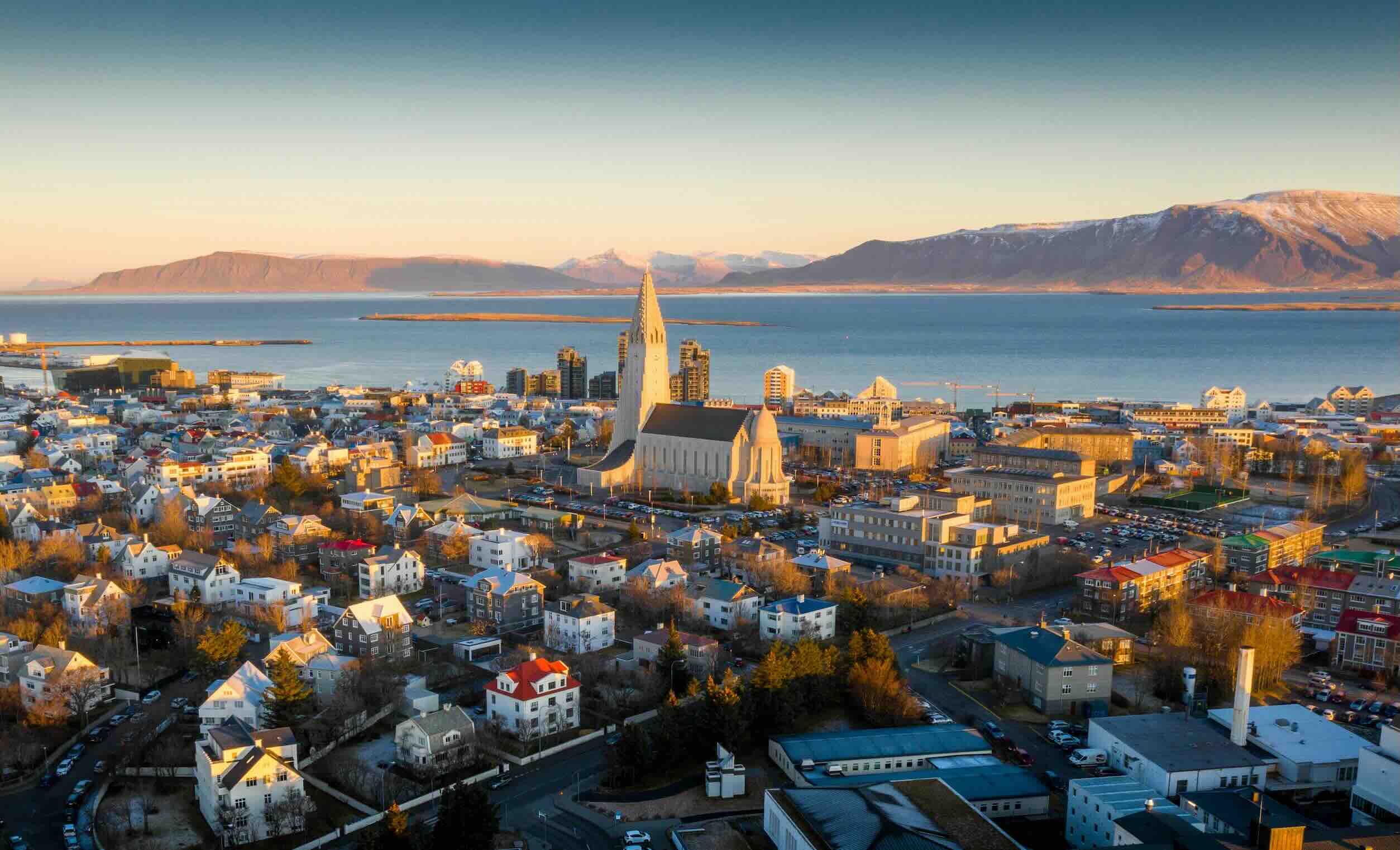
This is a Reykjavik city guide.
I don’t know why but I’ve been missing Iceland so much lately! Really contemplating heading back soon but I just got a new puppy so that’s thrown any travel plans out the window for a little but while she settles in… aaanyway, I haven’t written a lot about Iceland here yet, but I do have this Iceland guide for first time visitors if you’re planning your first trip to Iceland and don’t know where to begin.
Today, however, I wanted to talk about Reykjavik, the northernmost capital in Europe. It’s small, colourful, creative and super easy to navigate, yet it’s also the gateway to some of the most dramatic landscapes on earth. You’re never far from a geothermal pool, a windswept coastline or a world-famous waterfall.
If you’re planning a trip to Iceland and wondering how long to spend in the city, what to prioritise, where to stay and how to structure your days, this Reykjavik city guide covers everything. You’ll find practical transport advice, 1–3 day itinerary ideas, food recommendations, hotel suggestions and tips to help you avoid common mistakes.
By the end of this post, you should be able to plan your entire Reykjavik trip confidently without opening 27 tabs.

Where Is Reykjavik & Why Visit?
A Quick Overview of Iceland’s Capital
Reykjavik sits on Iceland’s southwest coast, about 45 minutes from Keflavík International Airport. With a population of roughly 140,000 in the greater area, it’s one of the smallest capital cities in Europe, which is actually part of its charm. My first impression (going on a snowy December day) was that it felt like one of those cute mountain towns but also like a quaint fishing one.
The city is compact, walkable and centred around the 101 postcode (downtown). From there, you can reach most major sights on foot. Despite its size, Reykjavik punches well above its weight in terms of culture, food and design.
REYKJAVIK CITY GUIDE
Is Reykjavik Worth Visiting?
Hell yeah!
Colourful corrugated houses, cosy cafés, strong culture and views of snow-capped mountains across the bay…and it’s also a great base to explore the rest of the island.
From here you can easily go exploring the Golden Circle, the South Coast or heading further along the Ring Road. Even if you’re here primarily for Iceland’s nature, Reykjavik deserves at least a day or two in your itinerary.
It’s clean, extremely safe and ideal for solo travellers.
How to Get from the Airport to Reykjavik
Keflavík International Airport (KEF) is located around 50 km from the city centre. There are no trains in Iceland, so your main options are bus, taxi or rental car.
Airport to Reykjavik Bus Options
The two main operators are Flybus and Airport Direct. Both run in coordination with flight arrivals, so even if your flight is delayed, there will be a departure waiting.
Journey time: 45–60 minutes
Cost: typically 25€–35€ one way
Drop-off: either at the main bus terminal (BSÍ) or at selected hotels (sometimes with a short shuttle transfer)
Buses are comfortable, reliable and by far the most popular option for visitors staying downtown. We took the Flybus and it was super easy!
Taxi from Keflavík to Reykjavik
A taxi will cost significantly more, often 120€–160€ one way. It only makes sense if you’re travelling as a group and splitting the cost or arriving very late at night.
Renting a Car at the Airport
If you’re planning to drive the Golden Circle or explore beyond Reykjavik, picking up a rental car at the airport can be convenient. For city-only trips, you don’t need one. Reykjavik itself is very walkable.
To travel around the country, if you’ve got the time and want to properly explore, I’d definitely recommend a car. But please be extremely careful in extreme winter conditions! Roads close, everything is very remote and you can get stranded in the middle of nowhere. My brother and his wife had to find shelter at a fully booked small hotel and just hang in the lobby when the roads they were driving through closed due to strong winds.
REYKJAVIK CITY GUIDE
Where to Stay in Reykjavik
The best area to stay is downtown (postcode 101). You’ll be within walking distance of major sights, restaurants and tour pick-up points.
Reykjavik accommodation isn’t cheap, but staying centrally saves time and transport costs.
I definitely recommend the one we stayed in, Sand Hotel – super central, superb breakfast, great customer service, sleek rooms, super clean…no complaints. We loved it! On our last morning, our bus to the airport was super early so we were going to miss breakfast. For those of us who need to leave at the crack of dawn there was coffee and croissants to take away which we thought was a really lovely touch! (we did get delicious Icelandic breakfast at the airport later paired with mimosas, cause why not?!)
It wasn’t cheap but, to be honest, we approached our trip to Iceland as a “let’s not worry about money here, this is what we work for” (as former DINKs!). We didn’t go crazy or splashy but we didn’t want to restrict ourselves too much either.
For a slightly (because it’s still Iceland…) cheaper option, I’ll recommend the Kvosin Downtown Hotel.
Best Things to Do in Reykjavik
If you’re searching for the best things to do in Reykjavik, you’ll quickly notice something: this isn’t a city packed with dozens of world-famous landmarks. Instead, Reykjavik’s charm lies in its vibe, design, culture and its proximity to nature. The good news? Most of the top attractions are within walking distance, so you can explore at a relaxed pace without constantly checking public transport routes. Here’s my Reykjavik city guide top things to do:
Visit Hallgrímskirkja
Reykjavik’s most iconic landmark towers over the city and is usually the first thing visitors spot. The church’s design was inspired by Iceland’s basalt lava columns, giving it a dramatic, almost otherworldly appearance. Step inside to admire the minimalist interior, then take the lift to the top of the tower for panoramic views over the colourful rooftops of Reykjavik, the harbour and the surrounding mountains. If you only do one landmark in the city, make it this one (right across the road from Cafe Loki which I’ll talk about later on!).
Explore Harpa Concert Hall
Located on the waterfront, Harpa is one of the most striking buildings in Iceland. Its geometric glass façade reflects the sea and sky, changing appearance depending on the light and weather. It’s free to enter, so even if you’re not attending a concert or event, it’s worth stepping inside to admire the architecture and views across the harbour.
Walk Along the Waterfront to Sun Voyager
The Sun Voyager sculpture (steps away from Harpa!) resembles a Viking ship and symbolises exploration and new beginnings. It’s one of the most photographed spots in Reykjavik, especially at sunset when the sky turns pastel and Mount Esja forms a dramatic backdrop across the bay. The coastal walking path here is peaceful and perfect for a slow stroll.
Wander Laugavegur & the 101 District
Laugavegur is Reykjavik’s main shopping street and the heart of the downtown 101 district. You’ll find independent boutiques, Nordic design shops, outdoor gear stores, record shops, cosy cafés and lively bars. This is the best place to get a feel for the city’s personality. Take your time, duck into side streets and enjoy the colourful buildings and street art scattered throughout the area.
Skólavörðustígur Rainbow Street
A few steps away from Laugavegur you’ll find the famous Skólavörðustígur Rainbow Street. Make sure you walk through it! It’s a perfect spot for an iconic photo too, especially if you manage to go when it’s quiet: at the top of the road you’ll see Hallgrímskirkja. I did not take a good photo 😒. So here are much better ones I found on Unsplash (credit below):


Discover Reykjavik’s Old Harbour
The Old Harbour blends traditional fishing boats with trendy restaurants and tour operators. It’s a lovely place to wander, especially in the late afternoon. Many boat tours depart from here and it’s also a great spot for seafood restaurants and casual dining with sea views.
Visit the National Museum of Iceland
If you want to understand Iceland beyond the landscapes, this museum offers an engaging overview of the country’s history, from Viking settlement to modern-day society. It’s not overwhelming in size, making it manageable even if you’re short on time and it adds helpful context to everything you’ll see around Iceland.
Head Up to Perlan
Perlan sits on a hill overlooking Reykjavik and offers one of the best viewpoints in the city. Inside, you’ll find interactive exhibitions about glaciers, volcanoes and Iceland’s natural forces. It’s an excellent option if the weather isn’t ideal or if you’re travelling with family and want something educational but engaging.
Relax in a Local Geothermal Pool
Visiting a public swimming pool is one of the most authentic things to do in Reykjavik. Icelanders use pools as social spaces, gathering in the hot tubs to chat and unwind. It’s far more affordable than luxury lagoons and gives you a genuine glimpse into local life. Just be prepared for the pre-swim shower rules, which are taken seriously.
Go Whale Watching from the Old Harbour
Whale watching tours operate year-round, though sightings depend on season and conditions. From minke whales to humpbacks and dolphins, it’s a unique way to experience Iceland’s marine life just minutes from the city centre.
Join a Northern Lights Tour (Winter)
Between October and April, when nights are dark enough, you can join guided tours that leave Reykjavik to search for the Northern Lights. Clear skies are essential and sightings are never guaranteed, but witnessing the aurora dancing across the Icelandic sky is unforgettable.
Explore Reykjavik’s Street Art Scene
Murals and large-scale artworks are scattered throughout downtown, giving the city a creative, slightly edgy feel. Keep your eyes open as you wander; some of the best pieces aren’t marked on maps and are discovered by accident.
Join a Walking Tour
One of the best ways to experience Reykjavik is on foot with a knowledgeable guide. The city offers excellent walking tours, including tip-based “free” tours that cover history, folklore, politics and local culture. They’re informative, often surprisingly funny, and a great way to meet fellow travellers if you’re visiting solo. Even if you normally skip tours, Reykjavik’s compact size makes a guided walk feel manageable and genuinely worthwhile. If you’re a regular reader you’ll know I’m a BIG FAN of these walking tours we find all over Europe!
Visit Hús máls og menningar
Iceland is a VERY bookish country! From their Christmas Eve tradition of exchanging books as gifts and reading the night away to Reykjavik being selected as the first non-native English speaking city to receive the title of UNESCO City of LIterature. And one of my favourite spots in the city is Hús máls og menningar, the “Old Bookshop” which is actually bookshop (English + Icelandic), a bar, a live music venue AND a breakfast spot!
Reykjavik may not overwhelm you with attractions, but that’s exactly its appeal. It’s a city best experienced at a gentle pace, where the combination of culture, coastline and creativity makes even simple walks memorable.
REYKJAVIK CITY GUIDE
How Many Days Do You Need in Reykjavik?
Reykjavik works well as a short city break or as the start/end of a longer Iceland trip.
1 day: See the highlights and get a feel for the city.
2 days: Add museums, geothermal pools and better food exploration.
3 days: Use one day for a Golden Circle or nearby nature tour.
1 Day in Reykjavik: The Perfect First-Time Itinerary
If you only have one day, focus on the essentials.
Start your morning at Hallgrímskirkja, the city’s iconic church inspired by Iceland’s basalt lava columns. Take the lift to the top of the tower for panoramic views over the colourful rooftops and surrounding mountains. It’s the best introduction to Reykjavik’s layout.
From there, walk down Skólavörðustígur (the rainbow street) towards Laugavegur, the main shopping street. Stop for coffee and a pastry along the way. Reykjavik does cosy cafés extremely well!
You could slot in a walking tour to get a 1:30hr tour of the city and learn more about its history…
In the afternoon, head to Harpa Concert Hall. Even if you don’t attend a performance, step inside to admire the geometric glass façade and harbour views. Continue walking along the waterfront to Sun Voyager, a striking steel sculpture that resembles a Viking ship and makes for a beautiful photo spot, especially at sunset.
Finish your day at the Old Harbour area for dinner and drinks or head over to one of the restaurants I’ll recommend further down.
Everything in this itinerary is walkable and can be done at a relaxed pace.
2 Days in Reykjavik: Add Culture & Relaxation
With a second day, you can explore some of the city’s cultural highlights and experience Iceland’s famous geothermal bathing culture.
Consider visiting the National Museum of Iceland to understand Iceland’s Viking history and cultural development. It provides helpful context for everything you’ll see around the country.
Another excellent stop is Perlan, which combines interactive exhibitions with an observation deck offering sweeping views over Reykjavik and the coastline.
In the afternoon, relax at Sky Lagoon, just outside the city. Its infinity-edge pool overlooking the ocean feels luxurious yet authentic. Many visitors also compare it with the Blue Lagoon, which is closer to the airport and often visited on arrival or departure day or as part of the Golden Circle tour.
If you’re on a budget, Reykjavik’s local public swimming pools are a fantastic alternative: affordable, less crowded and genuinely local.
3 Days in Reykjavik: Add a Golden Circle Day Trip
Most visitors spend their third day exploring Iceland’s famous Golden Circle.
The Golden Circle includes three major stops:
Þingvellir National Park, where you can walk between the North American and Eurasian tectonic plates and learn about Iceland’s historic parliament site.
Geysir, home to Strokkur, which erupts every few minutes.
Gullfoss, a powerful, two-tiered waterfall that’s one of Iceland’s most impressive sights.
You can either self-drive (ideal if you want flexibility and extra stops) or join a guided tour (stress-free and perfect if you prefer not to drive in winter conditions).
My main advice is that you book in advance if you’re joining a tour! We almost didn’t make one as our trip was so last minute. We ended up on this Viator tour and loved it! Our guide was excellent, super friendly and played Icelandic music the whole way to showcase the local talent (many of them super famous, of course, like Bjork and Of Monsters & Men).
It included the Kerid volcano crater (where we saw the sun rise at 11am!), the Fridheimar tomato farm where we could have a quick lunch in a massive greenhouse and entrance to the Blue Lagoon to wind down at the end of the tour (we had 2 hours there).
As it was winter the sun had long gone down and it looked SO cool in the dark! They also had people walking around and shining big spotlights on couples if it looked like they were doing something they shouldn’t 😂
Where to Eat in Reykjavik
This wouldn’t be my Reykjavik city guide if I didn’t talk about food. The city’s food scene is small but strong. To be honest, I wasn’t sure what I expected. I think I had in my mind a very Scandi, seafoody scene but was met with a very international cuisine. We had delicious Icelandic food which was our main priority but also had late night Mexican tacos and a really scrumptious middle eastern meal.
- Café Loki is a great place to try traditional Icelandic dishes opposite Hallgrímskirkja. It’s especially good if you’re curious about classic local flavours in a casual setting. We had rye bread with smoked salmon, lamb soup, Brennivin (Iceland’s signature spirit) and rye bread ice cream. I still dream about it! It doesn’t sound great but it’s absolutely delicious! In fact, all the rye bread everything in Iceland is amazing!
- For variety, head to Hlemmur Mathöll, a stylish food hall offering everything from Icelandic comfort food to international cuisine. It’s perfect if you’re travelling with others and everyone wants something different.
- For a either a fancy or romantic dinner, we LOVED Sjávargrillið! The food was absolutely perfect, from the rye bread + butter starter to all the different plates we shared. We had lobster tacos, seafood pasta, lobster sushi… all in a very intimate, low lit, small setting. Gorgeous! Booking advised.
- Sumac: have you watched Somebody Feed Phil? We were really excited to see him visit Sumac in this episode. We had the most delicious middle eastern dinner there – gorgeous prawn skewers, delicious bread covered in zatar and dipped in hummus and, the star of the show for me (for my partner the prawns took top spot), the date cake with ice cream… which is not surprising at all given my all-time favourite thing in the UK is the sticky toffee pudding to be honest!
REYKJAVIK CITY GUIDE
Best Bakeries in Reykjavik
Icelandic pastries are not to be underestimated. Iceland is not technically Scandinavia but 1) it’s Scandi adjacent and 2) they come from Norway so… it’s no surprise their pastries are gorgeous.
Brauð & Co is probably the most popular bakery in Reykjavik! Famous for its cinnamon buns and often has a queue out the door, for good reason.
Sandholt is ideal if you want a sit-down brunch or beautifully presented pastries in a more relaxed setting.
Deig Workshop offers creative and indulgent options if you want something slightly different.
Prices are higher than in most European cities, but the quality is excellent.
Reykjavik Travel Tips
Is Reykjavik Expensive?
Yes. Food, alcohol and tours are particularly pricey. A realistic daily budget (excluding accommodation) can range from 60€–120€ depending on activities.
Supermarkets and bakeries are good for keeping costs down.
Best Time to Visit
Summer (June–August): Midnight sun, milder weather, easier driving conditions.
Winter (November–March): Northern Lights potential, fewer daylight hours, colder temperatures. We literally saw the sun rise at 11am!!!
Getting Around
Downtown Reykjavik is very walkable. Public buses exist but are rarely necessary for short stays. Many tours include hotel pick-up or have a stop nearby. For our Golden Circle tour we walked a few steps from our hotel.
What to Pack
Layers are essential year-round. Even in summer, temperatures can change quickly. Bring:
- Waterproof jacket
- Warm layers
- Comfortable walking shoes!!
- Swimsuit for geothermal pools
Souvenirs in Reykjavik
I’m not usually keen on encouraging consumerism but I have to talk about the Icelandic slippers! I love mine SO MUCH, they’re one of the best souvenirs I’ve ever bought ever. They’re beautiful, comfy and so Christmassy during the winter months.
You’ll also find unique things like Icelandic jumpers and fermented fish, a local delicacy which you can get for your friends and family. I can’t promise they’ll enjoy it though 😅
REYKJAVIK CITY GUIDE
Is Reykjavik Safe?
Reykjavik is consistently ranked as one of the safest cities in the world. Solo travellers, including solo female travellers, generally feel very comfortable here.
As always, use normal travel awareness but crime rates are extremely low.
Final Thoughts: Is Reykjavik Worth It?
If you’re expecting a bustling metropolis packed with landmarks, Reykjavik might feel quiet.
If you’re looking for charm, creativity, incredible natural access and a relaxed pace, you’ll likely love it.
Reykjavik works beautifully as both a short city break and as a base for exploring Iceland’s iconic landscapes. With the right planning — and realistic expectations — it’s a memorable and surprisingly vibrant stop on any Iceland itinerary.
You can now build on this guide by linking it to your other Iceland post and expanding the cluster further with more detailed day trips or neighbourhood guides.
This is was a Reykjavik city guide.
