
This is a post about the best cities to visit in Germany.
Best Cities to Visit in Germany
Let me preface this with…I LOVE Germany!! It was the first place I visited in Europe as I moved there as an au pair before moving to the UK. While people talk a lot about visiting France and Italy, I find Germany ends up being a bit overlooked and underrated. It’s often associated with efficiency, industry and big cities like Berlin or Munich, but the country offers far more variety than many people expect. From historic old towns and riverside cities to creative hubs and alpine gateways, Germany is ideal for both short city breaks and longer, slower trips.
Whether you’re visiting for the first time, planning a return trip or considering a move, these are some of the best cities to visit in Germany, each offering a distinct vibe, culture and pace of life.

Berlin
For a long time this was my favourite city in Germany and it’ll always have a spot in my heart. Germany’s capital is impossible to summarise neatly. Berlin is raw, creative, political, messy and endlessly fascinating.
I remember the first time I went to Berlin. I’d been living further south near Frankfurt and had a friend visiting for the New Year’s break. We were both broke and found a trip that would cost 9€ each way in a van and 9€ per night at the Generator hostel. We were dropped off at a random station, it was winter, everywhere looked kinda punk, kinda David Bowie. I was in awe! (and 19…)
The city is obviously known for its history, from the Berlin Wall and Cold War landmarks to its museums and memorials, but it’s also one of Europe’s most forward-thinking cultural hubs. Neighbourhoods like Kreuzberg, Neukölln and Prenzlauer Berg feel completely different from one another, giving the city a sense of constant reinvention. It was in Berlin that I first joined a free walking tour which is one my top tips for travelling Europe on a budget. They are so good! Especially in a city with such rich history.
Berlin is also one of the most affordable major capitals in Western Europe, especially when it comes to food, public transport and cultural activities. Its nightlife is legendary, but there’s just as much value in its parks, lakes and cafés if you prefer a slower pace.
Berlin is a great choice if you enjoy cities with strong identities, alternative culture and plenty of space to explore beyond the tourist centre.
Munich
I don’t know if people think of Munich as more than Oktoberfests… Outside of that, it’s got a bit of a reputation for being a bit corporate and unfriendly. However, while it’s more polished than Berlin and wealthier, it’s also deeply connected to nature, tradition and outdoor living. I didn’t love it the first time I visited many years ago, but I’ve been back many times since and grew to love it! So much it’s become one of my favourite Germany cities.
I’ve actually got a whole Munich city guide here if you want to know more about it.
The city sits close to the Alps, making it a fantastic base for day trips to lakes, mountains and small Bavarian towns. Within the city itself, English Garden is one of the largest urban parks in Europe and locals genuinely use it year-round.
Munich is also known for its beer gardens, which are especially enjoyable in warmer months, and for its strong café culture. While it’s one of the more expensive German cities, the quality of life is high and everything runs smoothly.
If you’re planning a trip, do check out my 3-day Munich itinerary for a deeper dive into neighbourhoods, food and attractions.
Hamburg
Hamburg feels different from most German cities. As a major port city, it has a maritime identity that shapes everything from its architecture to its attitude. I first went there while attending the Reeperbahn Festival, one of the most popular music conferences in Europe (if that’s your thing…I had a great time!)
Water plays a huge role here, with canals, rivers and lakes woven into daily life. Areas like HafenCity and Speicherstadt are particularly striking, while neighbourhoods such as Sternschanze and St. Pauli bring a creative, edgier vibe. I loved walking around the city. Each turn would take me to a whole different area!
Hamburg is ideal if you like cities that feel lived-in, more local life rather than touristy. It has excellent restaurants, a strong music scene and plenty of green space but without the Berlin crowds.
It’s also a great option for a longer stay as it balances culture, work and quality of life very well. In fact, I’ll have to recommend the hotel I stayed in, The Reichshof. Close to the station, close to this wonderful Portuguese area with loads of little restaurants and cafes. It also had one of the best hotel breakfasts I’ve had in a big, beautiful room that felt so spacious and accommodating.
Cologne
Cologne is one of Germany’s most chilled cities. It’s friendly, open and sociable, with a strong local identity that centres around community.
The city’s most famous landmark, Cologne Cathedral, dominates the skyline and is genuinely impressive, but Cologne’s charm lies more in its vibe than its attractions. The Rhine riverfront is lively, especially in summer, and neighbourhoods like Ehrenfeld feel creative and youthful.
If you’re ever in Cologne, the best tip I can give you is to stop at Bei Oma Kleinmann for THE BEST schnitzel! It’s legendary! And if you’re looking for sociable nightlife, head to Zülpicher Straße or “the party mile”. It’s a street in Cologne known for having a high concentration of bars with constant or very long happy hours. Located near the University of Cologne, this street is the primary nightlife hub for students.
Cologne is also known for its carnival culture, which reflects the city’s relaxed and humorous outlook. It’s a great choice if you want a city that feels social, welcoming and easy to navigate.
Best cities to visit in Germany.
Leipzig
Leipzig is often described as “the new Berlin”, but it has its own personality and rhythm. It’s creative, affordable and fast-growing, with a strong arts scene and a large student population.
The city is compact and easy to explore, with leafy neighbourhoods, repurposed industrial spaces and a growing café culture. Leipzig also has a strong musical heritage, connected to composers like Bach, which adds depth to its cultural scene.
For travellers interested in emerging destinations rather than established tourist hotspots, Leipzig is one of the most exciting cities in Germany right now. You know, the ol’ off the beaten track.
Dresden
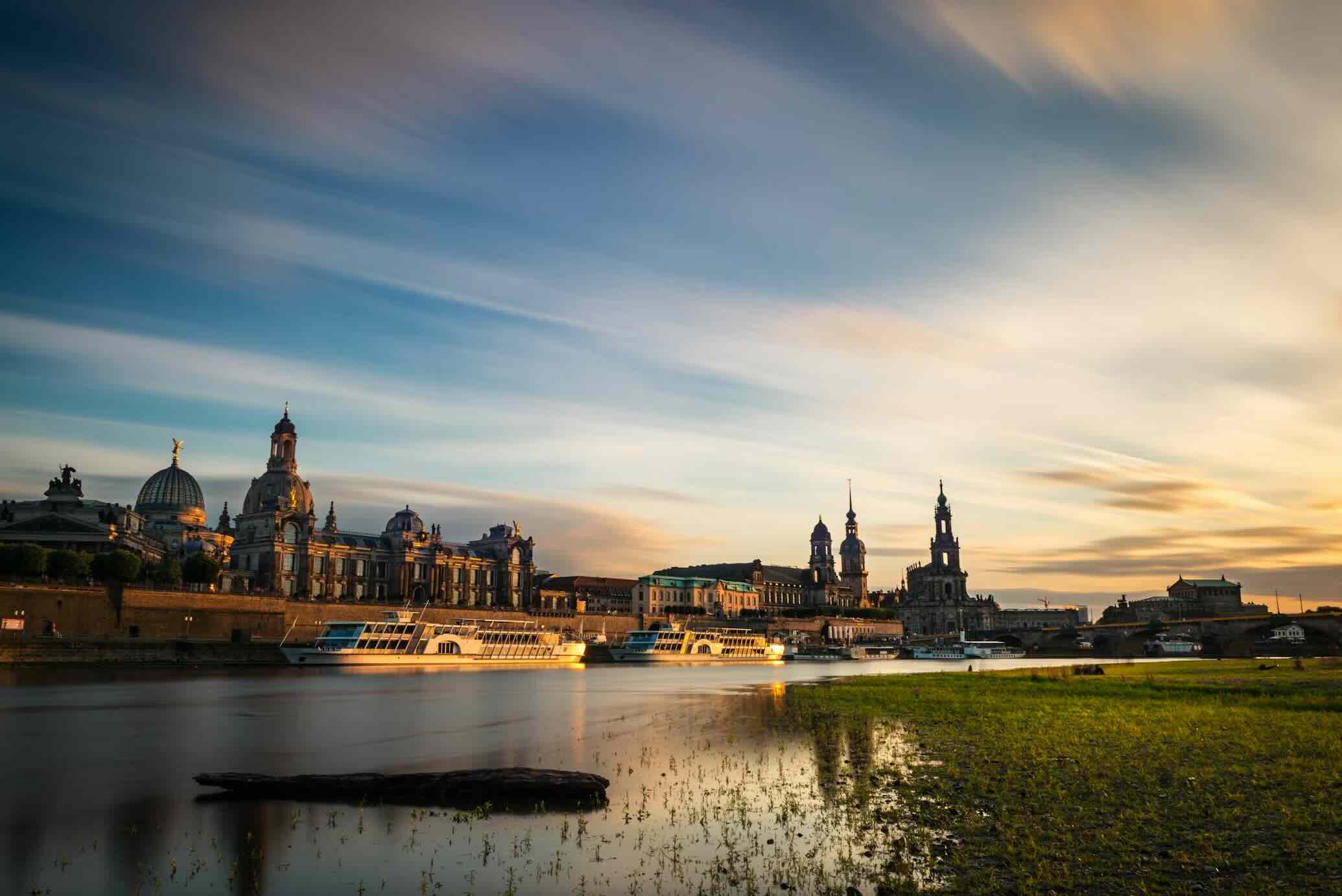
Dresden is one of Germany’s most visually striking cities. Much of its historic centre was rebuilt after World War II, resulting in grand architecture that feels almost theatrical.
The city is particularly appealing if you enjoy classical art, baroque buildings and scenic river views. The Elbe river runs through Dresden and the surrounding Saxon Switzerland region offers excellent hiking opportunities.
Dresden suits travellers who enjoy slower travel, cultural depth and day trips into nature rather than nightlife or trend-driven scenes.
Düsseldorf
Düsseldorf is one of Germany’s most stylish and underrated cities. Located along the Rhine in western Germany, it blends polished architecture, a strong art scene and a relaxed riverside atmosphere in a way that feels effortlessly put together.
The city is known for its fashion and creative industries, which gives it a slightly more refined feel than nearby Cologne. The Königsallee is one of Europe’s most elegant shopping boulevards, while the MedienHafen district showcases striking modern architecture alongside bars and restaurants. The old town is lively and sociable, often described as having “the longest bar in the world” thanks to its high concentration of traditional breweries.
Düsseldorf also has one of the largest Japanese communities in Europe, which means the food scene is surprisingly diverse, particularly when it comes to ramen and sushi. The Rhine promenade is a highlight in warmer months, perfect for walking, cycling or sitting with a drink as the sun sets.
It’s an excellent choice if you’re looking for a city that feels stylish and easy to navigate, with strong food options and a more relaxed pace than Berlin. Düsseldorf also pairs well with Cologne on a single trip, as the two cities are less than 30 minutes apart by train but offer very different atmospheres.
Heidelberg
Heidelberg is one of Germany’s most romantic cities and a favourite for first-time visitors. Its old town, castle ruins and riverside setting create a postcard-perfect atmosphere. I lived nearby and used to visit all the time! I even went back to visit recently for a walk down memory lane and it was just as sweet as I remembered.
The city is also home to Germany’s oldest university, which gives it a youthful energy despite its historic appearance. Cafés, bookshops and scenic walks make it ideal for relaxed exploration. Make sure to take some of the hiking trails for gorgeous views from both sides of the river!
Heidelberg works well as a short city break or as part of a longer itinerary through southern Germany.
Frankfurt
Frankfurt often gets overlooked and, I’m not gonna lie, I don’t love it. I used to go there every once in a while and there’s not a lot going on but I feel like I’d be remiss had I kept it off the list. It’s worth considering, especially if you’re interested in modern Germany.
As the country’s financial hub, Frankfurt has a striking skyline that sets it apart from other German cities. At the same time, it has a cute old town area, riverside walks and excellent museums.
Frankfurt is also one of Germany’s most international cities, making it a good entry point for travellers who want a global feel mixed with local culture.
Stuttgart
Stuttgart is surrounded by vineyards and hills, giving it a surprisingly scenic setting for a major city. It’s best known as the home of Mercedes-Benz and Porsche but there’s more to it than industry.
The city offers excellent museums, green spaces and access to the stunning Black Forest region. I’d say it’s a good choice if you’re interested in combining city life with outdoor activities.
Is Germany Worth Visiting?
Germany is absolutely worth visiting! Especially if you like your travels with a bit of everything: rich history, strong culture, gorgeous nature… Cities feel distinct from one another, public transport makes travel easy and there’s a strong balance between culture, nature and everyday life.
It’s also one of the best countries in Europe for longer stays, which makes it appealing not just for tourists but for people considering working, studying or moving there.
I LOVE Germany! It’s a wonderful country! Some of my favourite things about living there was getting into hiking, how so many people are much more offline than online and focusing on the simple things in life such as spending time outdoors and quality time with friends and family. (At least that was my experience with my wonderful host family!)
How to Choose the Best German City for Your Trip
The best city to visit in Germany depends on what you’re looking for. Berlin and Leipzig are ideal for creative energy and alternative culture. Munich and Heidelberg suit travellers who enjoy tradition and scenery. Hamburg and Cologne offer strong local identity.
If you’re planning your first trip, combining two cities with different personalities such as Berlin and Munich, or Hamburg and Cologne gives you a decent introduction to the country.
But these are just some of the best cities to visit in Germany! To be honest, there are SO many villages, towns and regions that are worth your time too.
Are you planning on visiting Germany anytime soon? Let me know where, I’d love to hear!
This is a post about the best cities to visit in Germany.
